

Introduction
Walk into any health food store, scroll through any wellness influencer’s feed, or browse any supplement website, and you’ll encounter ashwagandha. It’s everywhere—packaged into gummies, capsules, powders, and even lattes. The claims are bold: reduces stress, lowers cortisol, calms anxiety, improves sleep, sharpens focus.
But here’s the question that actually matters: does it work?
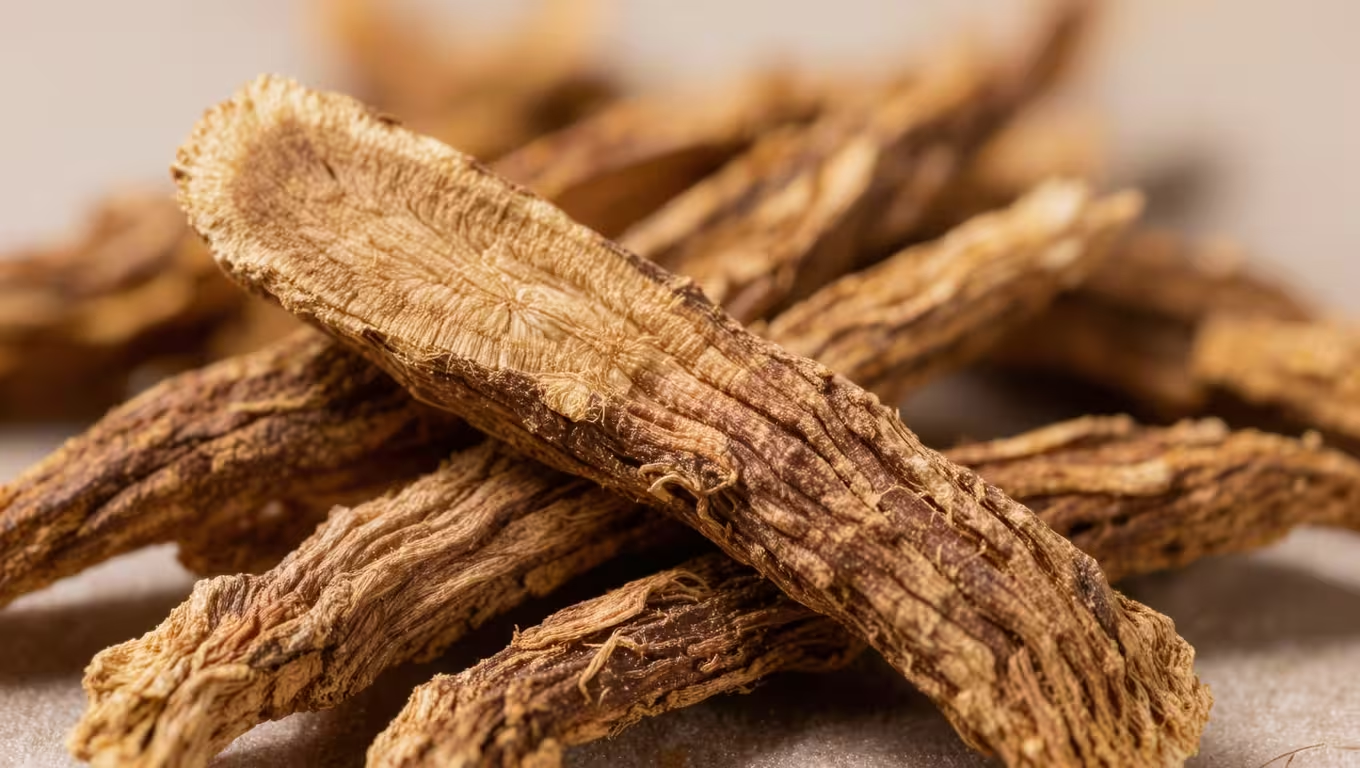
Ashwagandha (Withania somnifera) isn’t new. It’s been used in Ayurvedic medicine for thousands of years, primarily as a rasayana—a rejuvenating tonic meant to promote vitality and help the body adapt to stress . The name itself is evocative: in Sanskrit, it translates roughly to “smell of the horse,” referring both to the root’s odor and the traditional belief that it imparts the strength and vigor of a stallion.
The modern interest, however, is more scientific. Researchers have spent the last two decades trying to determine whether this ancient herb actually does what traditional healers claimed. The results, as is often the case with natural supplements, are interesting—and more than a little complicated.
What follows is a careful look at what we actually know. Not what supplement companies want you to believe, not what a single small study claimed, but the full picture emerging from the best available evidence.
🌿 Ready to Try Ashwagandha?
We’ve curated the highest-rated, third-party tested ashwagandha supplements available on Amazon.
→ See Top-Rated Ashwagandha on AmazonAs an Amazon Associate, we earn from qualifying purchases.
First, Understanding How Ashwagandha Might Work
Before diving into the research, it helps to understand the proposed mechanisms.
Ashwagandha is classified as an adaptogen—a term coined by Soviet scientists in the mid-20th century to describe substances that supposedly help the body “adapt” to stress. Adaptogens are thought to work by modulating the hypothalamic-pituitary-adrenal (HPA) axis, the complex system that controls your body’s stress response .
When you encounter a stressor—real or perceived—your hypothalamus releases corticotropin-releasing hormone, which triggers your pituitary to release adrenocorticotropic hormone, which then stimulates your adrenal glands to produce cortisol. Cortisol is the main stress hormone. It’s essential for survival, but when levels remain chronically elevated, problems emerge: anxiety, sleep disturbances, weight gain, immune suppression.
The active compounds in ashwagandha are withanolides, steroidal lactones that appear to influence this system. They’re concentrated in the roots and leaves, which is why most supplements use root extracts standardized to contain specific percentages of withanolides .
The theory is straightforward: ashwagandha compounds somehow calm the HPA axis, reducing cortisol production and thereby reducing the subjective experience of stress. It’s plausible. But plausible isn’t the same as proven.
What the Latest Research Actually Shows
The evidence base for ashwagandha has grown considerably in recent years. Several systematic reviews and meta-analyses have now pooled data from multiple randomized controlled trials—the gold standard in medical research.
The 2024-2025 Meta-Analyses
A June 2025 meta-analysis published in BJPsych Open examined 15 randomized controlled trials with a combined sample size of 873 patients . The findings were statistically significant:
- Ashwagandha supplementation reduced anxiety scores on the Hamilton Anxiety Rating Scale (HAM-A) by an average of 3.52 points after eight weeks of treatment
- Stress scores on the Perceived Stress Scale (PSS) decreased by an average of 4.88 points
- Cortisol levels dropped significantly—a mean reduction of 2.36 units compared to placebo
However—and this is important—the same analysis found no statistically significant improvement in quality of life .
Another 2024 meta-analysis published in Explore looked at nine RCTs involving 558 patients and found similar results: significant improvements in PSS scores, Hamilton Anxiety Scale scores, and serum cortisol levels . Four of the included studies reported mild to moderate adverse events, though serious side effects were rare.
The Cortisol Question
Here’s where things get interesting—and slightly confusing.
A 2025 meta-analysis by Albalawi, published in Nutrition and Health, examined seven studies on cortisol and six on perceived stress . The findings were split:
- Cortisol reduction was statistically significant: -1.16 µg/dL (95% CI: -1.64 to -0.69, P < 0.001)
- Perceived stress reduction, however, was not statistically significant (SMD = -0.355, P = 0.40)
This is genuinely puzzling. If cortisol drops but people don’t feel less stressed, what’s happening? Several possibilities come to mind.
First, cortisol is just one piece of a much larger puzzle. Stress perception involves psychological factors, life circumstances, coping mechanisms, and brain chemistry. Lowering cortisol alone may not be enough to shift how stressed someone feels day-to-day.
Second, the studies varied in quality and design. Some had small sample sizes. Some lacked proper blinding. Some used different ashwagandha preparations with different withanolide concentrations. When you pool this data, you’re averaging across a lot of noise.
Third, it’s possible that cortisol reduction takes longer to translate into perceived benefits. Most studies lasted 8-12 weeks, which may not be sufficient.
Newer Formulations
A 2025 study in Advances in Therapy tested a new ashwagandha formulation (Zenroot™) containing 1.5% withanolides . Ninety participants with mild to moderate stress received either 125 mg of the formulation or placebo for 84 days.
The results showed significant improvements in:
- Perceived Stress Scale scores
- Beck Anxiety Inventory scores
- Sleep quality (Pittsburgh Sleep Quality Index)
- Objective stress measures including skin response and heart rate variability
Notably, this study found improvements in both subjective and objective measures, though serum cortisol and salivary alpha amylase didn’t change significantly . The formulation was well tolerated with no reported adverse events.
A 2024 study in Nutrients tested three different doses (125 mg, 250 mg, and 500 mg) of an aqueous ashwagandha extract in chronically stressed adults . All three doses significantly reduced stress compared to placebo after eight weeks, and the effects appeared dose-dependent. Even the lowest dose—125 mg daily—produced measurable benefits.
The Dosage Question: How Much Actually Works?
This is where things get messy, because studies have used wildly different preparations and doses.
Looking across the research:
- Some studies used 125 mg daily of standardized extract and found benefits
- Others used 250-300 mg twice daily (500-600 mg total)
- The 2024 Explore meta-analysis noted that effective doses in the included studies ranged from 250-600 mg daily
- The Verywell Health review suggests 300-600 mg daily for anxiety, with benefits appearing after 6-8 weeks of consistent use
The challenge is that “ashwagandha extract” isn’t a single thing. Different extraction methods (water vs. alcohol vs. hydroalcoholic), different plant parts (root only vs. root and leaf), and different withanolide concentrations all produce different products. A 125 mg dose of a highly concentrated extract might contain more active compounds than a 600 mg dose of a weaker preparation.
This variability makes it genuinely difficult to give simple dosing recommendations. The best approach is to look for products standardized to withanolide content—typically 1.5% to 5%—and follow the manufacturer’s instructions, then adjust based on your response.
Beyond Stress: Sleep, Mood, and Focus
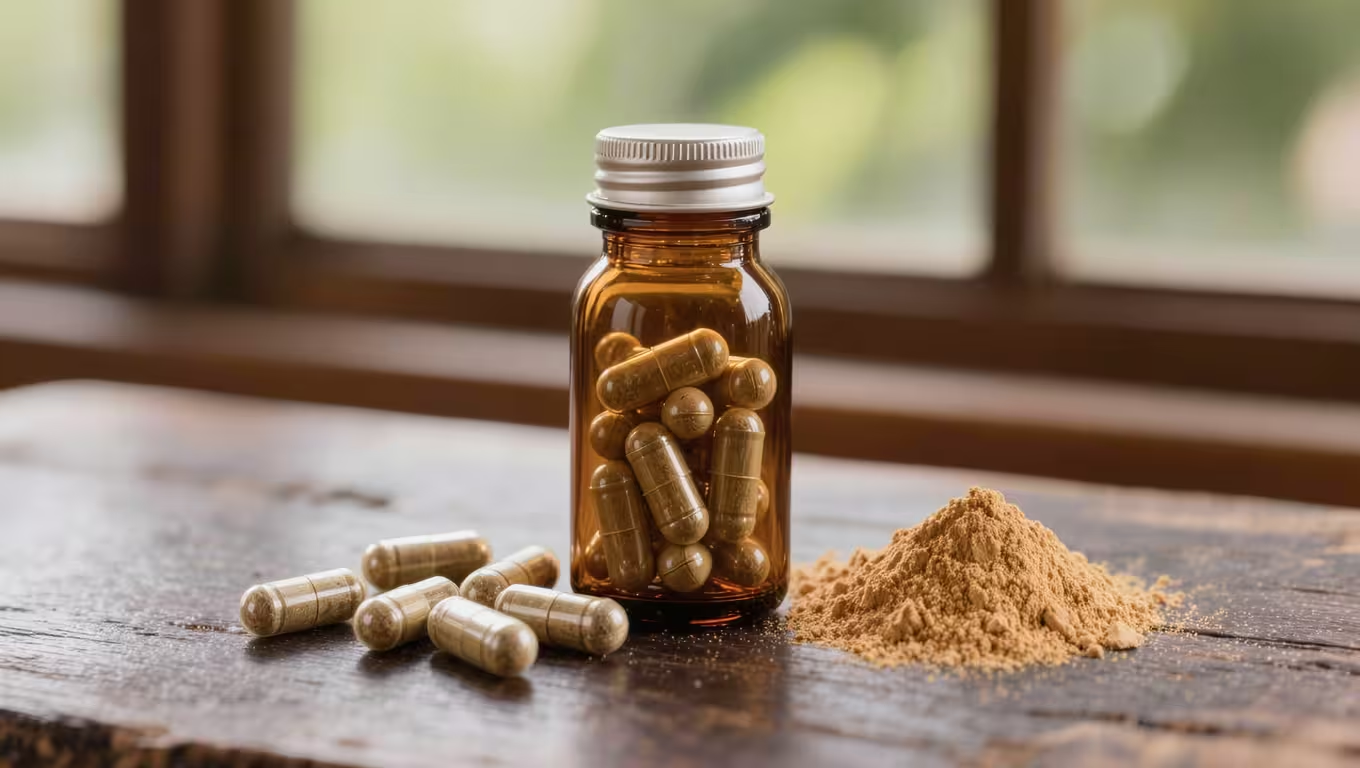
The stress research has led investigators to examine related outcomes.
Sleep
Several studies have found that ashwagandha improves sleep quality. A 2021 meta-analysis specifically on sleep found small but significant improvements in both sleep quantity and quality, particularly in adults treated for more than eight weeks . The effect was stronger at 600 mg daily than at lower doses.
The proposed mechanism involves triethylene glycol, a compound in ashwagandha leaves that appears to promote non-REM sleep . Whether this works reliably in humans is still being studied.
Mood and Focus
A 2021 study found that adults taking ashwagandha for 90 days showed better memory performance and made fewer errors on cognitive tasks compared to placebo . They also reported better focus and concentration.
The 2025 Zenroot study found improvements in mood as measured by the Profile of Mood States (POMS) questionnaire . Participants reported feeling more energetic, less fatigued, and in better spirits.
It’s worth noting that these effects, while statistically significant in some studies, are modest. We’re not talking about dramatic transformations. The improvements are real enough to measure but subtle enough that some people might not notice them.
🌿 Ready to Try Ashwagandha?
We’ve curated the highest-rated, third-party tested ashwagandha supplements available on Amazon.
→ See Top-Rated Ashwagandha on AmazonAs an Amazon Associate, we earn from qualifying purchases.
Safety and Side Effects: What You Need to Know
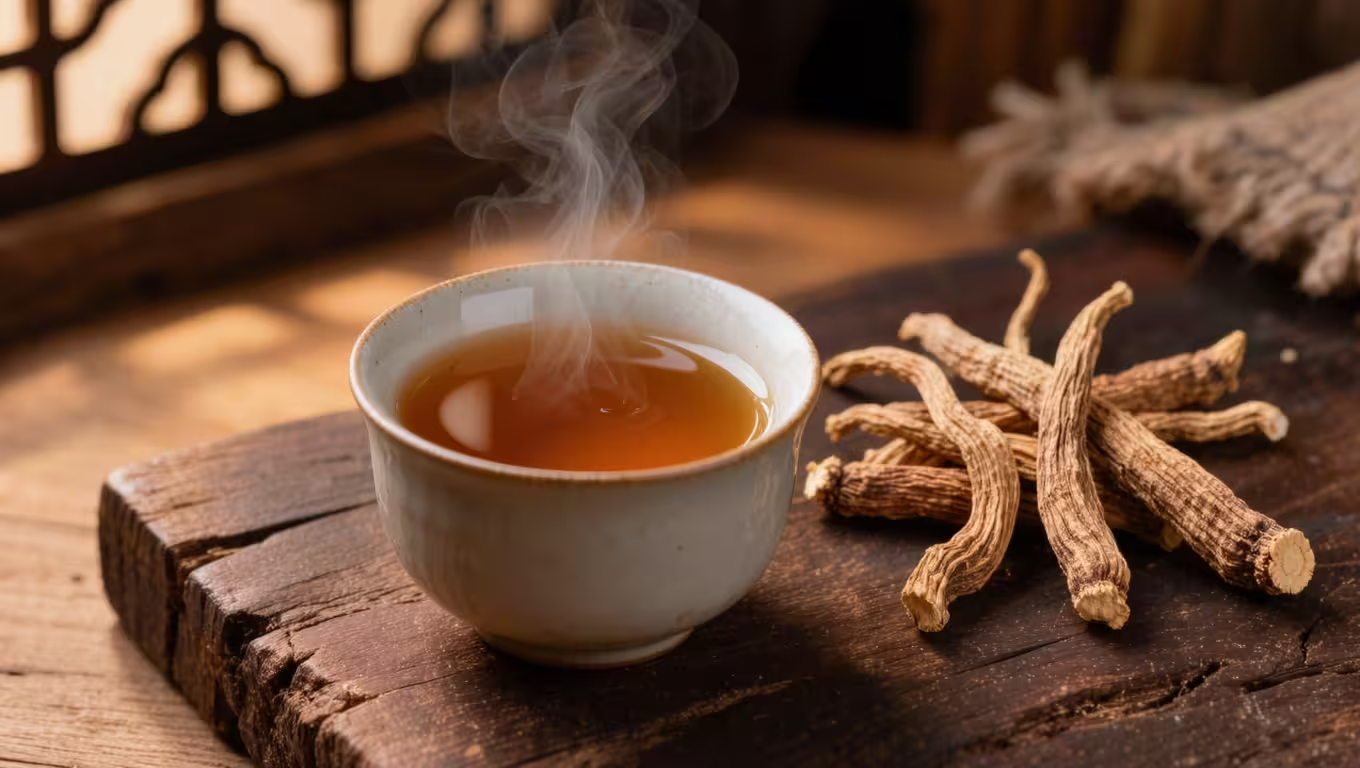
Ashwagandha is generally considered safe for short-term use—up to about three months . The evidence for longer-term safety simply doesn’t exist yet.
Common Side Effects
Some people experience mild side effects :
- Stomach upset or nausea
- Diarrhea or loose stools
- Headache
- Drowsiness or sedation
These typically resolve on their own or with dose reduction.
Serious Concerns
A few more serious issues deserve attention.
Liver injury: There have been case reports of ashwagandha-associated liver injury, including a 2020 case series from Iceland and the US Drug-Induced Liver Injury Network . The risk appears to be rare, but it’s real. Anyone with pre-existing liver conditions should be cautious.
Thyroid effects: Ashwagandha appears to increase thyroid hormone levels, at least in some people . A 2025 review in Phytotherapy Research found that ashwagandha elevated T3 and T4 in both animal studies and some human trials . Several case reports describe thyrotoxicosis—essentially, too much thyroid hormone—in people taking ashwagandha supplements . If you have thyroid disease or take thyroid medication, this is worth discussing with your doctor.
Hormonal effects: The same review found evidence that ashwagandha may increase testosterone in men and affect estrogen and gonadotropins in women . For most people, this probably doesn’t matter. But for those with hormone-sensitive conditions—prostate cancer, breast cancer, endometriosis—it could be relevant.
Pregnancy and breastfeeding: Ashwagandha should not be used during pregnancy due to possible abortifacient effects . Safety during breastfeeding hasn’t been established.
Drug Interactions
Ashwagandha can interact with several medications :
- Thyroid hormones (may increase effects)
- Diabetes medications (may lower blood sugar too much)
- Blood pressure medications (may increase effects)
- Immunosuppressants (may counteract them)
- Sedatives (may increase drowsiness)
- Blood thinners (theoretical risk, though evidence is limited)
If you take any prescription medications, checking with a healthcare provider before starting ashwagandha is genuinely important.
Putting It Together: Does Ashwagandha Really Help with Stress?
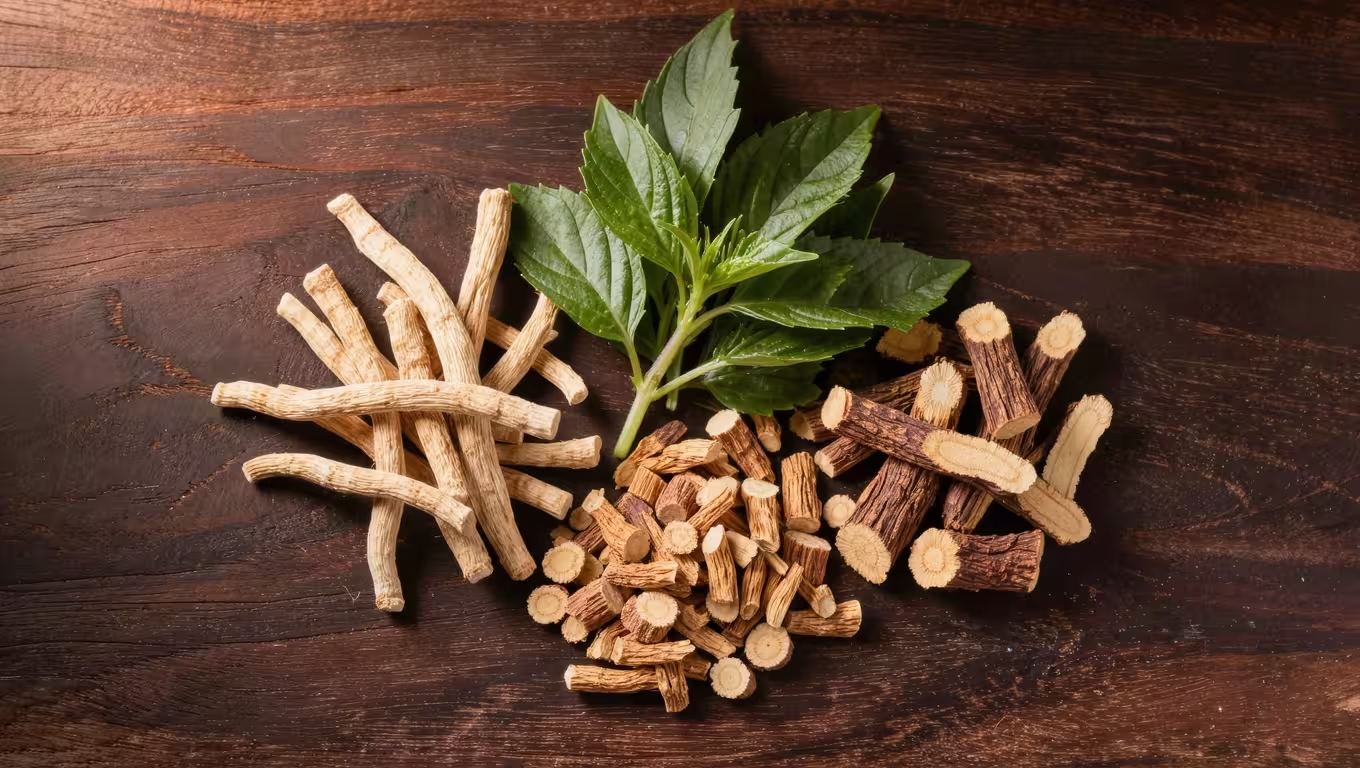
After reviewing the evidence, here’s where I land.
What the evidence supports:
- Ashwagandha consistently lowers cortisol levels in multiple studies and meta-analyses
- Many—though not all—studies find improvements in perceived stress and anxiety
- Benefits for sleep and mood are plausible and supported by some evidence
- Effects are modest but real, not dramatic transformations
What the evidence doesn’t support:
- That ashwagandha works for everyone—individual responses vary
- That higher doses are always better—125 mg works in some studies, 600 mg in others
- That it’s a replacement for therapy, medication, or lifestyle changes
- That long-term safety is established—we don’t have data beyond 3-6 months
The honest answer:
Yes, ashwagandha probably helps with stress—at least for some people, at least modestly. The cortisol data is consistent. The subjective improvements are real enough to show up in meta-analyses. But it’s not a miracle herb. It won’t fix a stressful life, resolve deep-seated anxiety, or replace good sleep, exercise, and social connection.
The disconnect between cortisol reduction and perceived stress in some studies is genuinely interesting. It suggests that lowering the stress hormone doesn’t automatically make you feel less stressed. Maybe that takes longer. Maybe it requires other changes. Maybe stress perception is about more than just biology.
Practical Takeaways: If You Want to Try Ashwagandha

If you’re considering ashwagandha for stress, here’s a reasonable approach:
Before starting:
- Talk to a healthcare provider, especially if you have thyroid issues, liver conditions, or take medications
- Don’t use it if you’re pregnant, breastfeeding, or trying to conceive
- Consider getting thyroid and liver function tests first if you have risk factors
Choosing a product:
- Look for standardized extracts with specified withanolide content (1.5-5%)
- Third-party testing (USP, NSF, ConsumerLab) adds confidence
- Root extracts are most studied, though some products use root and leaf
Dosing:
- Start low—125-300 mg daily is reasonable
- Take consistently for 6-8 weeks before judging effects
- Some people take it with food to reduce stomach upset
- Don’t exceed recommended doses thinking “more is better”—it’s not
Monitoring:
- Pay attention to how you feel—not just stress levels, but sleep, energy, mood
- Watch for side effects—stomach issues, headache, unusual fatigue
- Consider stopping after 3 months to reassess—long-term safety data is limited
Reality check:
- Ashwagandha is a tool, not a solution
- It works best alongside good sleep, regular exercise, social connection, and stress management practices
- If stress is significantly affecting your life, professional support (therapy, medical care) is more important than any supplement
The Bottom Line
Ashwagandha has real evidence behind it—more than many herbal supplements. The cortisol data is consistent. The stress and anxiety findings, while mixed, lean positive. For many people, it probably does help take the edge off.
But it’s not magic. It won’t fix a fundamentally stressful life. It won’t resolve trauma or anxiety disorders. And it comes with real considerations—thyroid effects, possible liver injury, drug interactions—that deserve attention.
The honest answer to “does ashwagandha really help with stress?” is: for some people, under some circumstances, probably yes. It’s worth trying if you’re curious and careful. But keep your expectations modest, pay attention to how you feel, and don’t abandon the fundamentals of stress management while you’re at it.
Resources
- National Center for Complementary and Integrative Health: Ashwagandha Fact Sheet
- National Institutes of Health Office of Dietary Supplements: Botanical Dietary Supplements
- PubMed Central: 2025 Ashwagandha Meta-Analysis
- Merck Manual Professional Edition: Ashwagandha Overview
- Verywell Health: Ashwagandha for Anxiety