
Introduction: Understanding Hydrocele Through an Ayurvedic Lens
Hydrocele is one of those conditions that men rarely discuss, yet it affects countless individuals worldwide. The scrotum swells due to fluid accumulation around the testicle—usually painless, but undeniably uncomfortable, sometimes embarrassing, and capable of interfering with daily life.
If you’re reading this, you might be looking for a way to avoid surgery. I understand that feeling completely. In fact, I faced a similar decision with a different condition, and you can read about my personal journey in how I got rid of varicocele naturally in 6 months. While varicocele and hydrocele are different, the principles of natural healing often overlap.
For a broader understanding of male reproductive health, our guide on 10 natural supplements to increase male testosterone provides valuable context on hormonal support and overall wellness.
But let’s focus on hydrocele specifically—and the Ayurvedic herb that offers the most hope: Punarnava.
What Is Hydrocele? A Quick Overview
Before diving into treatments, let’s clarify what we’re dealing with.
A hydrocele is a fluid-filled sac surrounding a testicle that causes scrotal swelling. It’s surprisingly common—about one in ten male infants is born with one, though most resolve on their own within the first year. In adults, it’s less common but still affects roughly one in a hundred men.
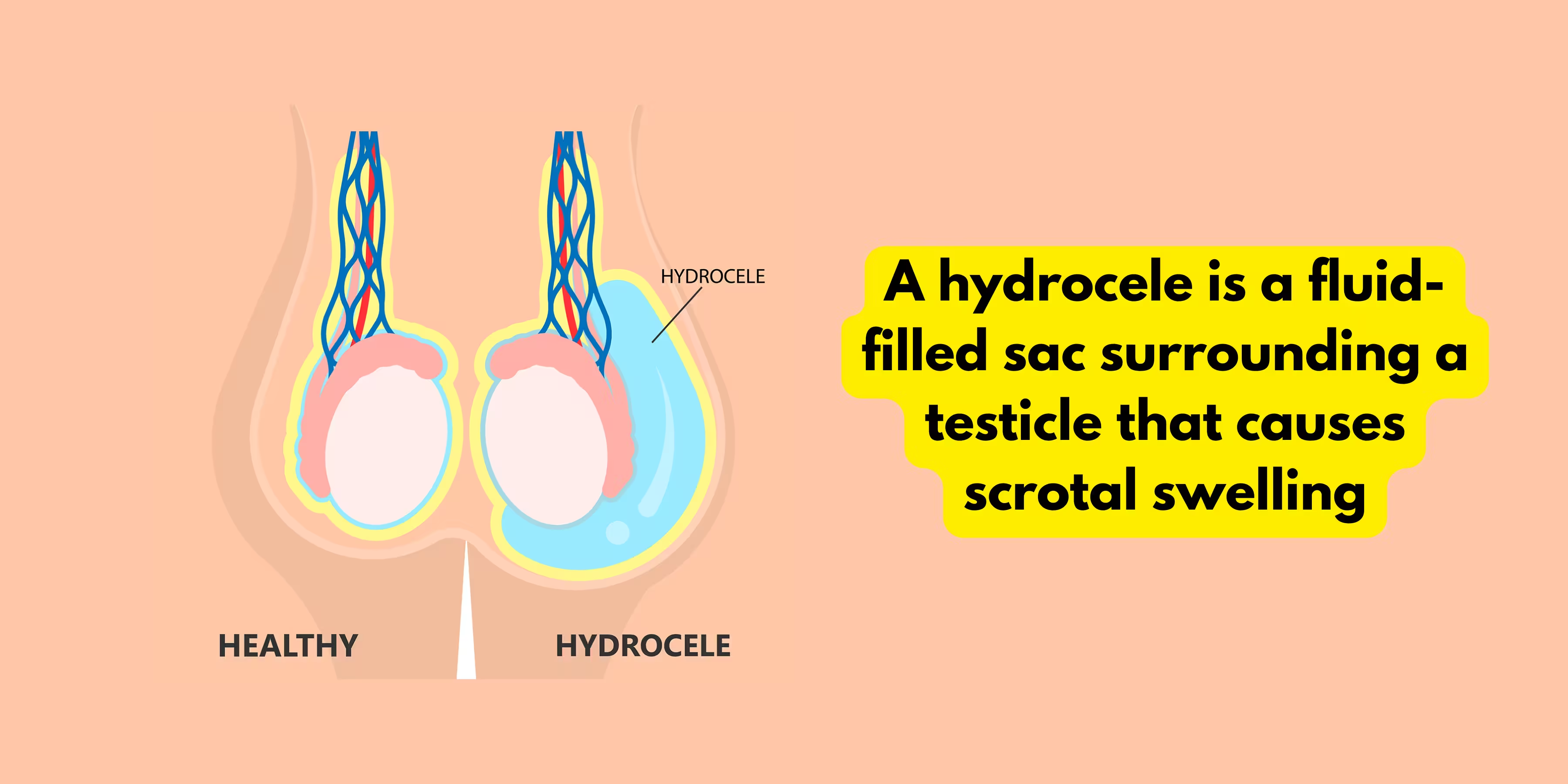
Hydroceles can develop for several reasons:
- Injury or trauma to the scrotal area
- Infection or inflammation of the epididymis or testicle
- Blockage in the lymphatic drainage system
- Sometimes, no clear cause at all—they simply appear
The good news? Hydroceles themselves aren’t usually dangerous. They’re not cancerous, they don’t typically affect fertility, and many men live with them without major issues. However, they can be uncomfortable, and in some cases, they grow large enough to interfere with walking or daily activities.
Conventional medicine offers surgery—hydrocelectomy—for large or symptomatic cases. But for mild to moderate hydroceles, Ayurveda provides a comprehensive approach that addresses the root cause rather than just draining the fluid.
For more context on natural approaches to male health issues, you might find our article on does Punarnava really work on hydrocele to be a helpful companion to this guide.
The Ayurvedic Perspective on Hydrocele
In Ayurveda, hydrocele is understood through the lens of the three doshas—Vata, Pitta, and Kapha.
Kapha dosha governs structure and lubrication in the body. When Kapha becomes imbalanced, it can lead to excessive fluid accumulation, sluggishness, and swelling. This is precisely what happens in hydrocele—Kapha-type fluids collect in the scrotal sac, creating the characteristic swelling.
Additionally, Vata dosha may be involved, particularly if there’s associated pain or if the condition is chronic and dry in nature. Pitta dosha might contribute if inflammation or infection is present.
The Ayurvedic approach focuses on:
- Reducing Kapha through diuretics and drying herbs
- Improving lymphatic drainage to move stagnant fluids
- Strengthening the tissues (dhatus) to prevent recurrence
- Addressing the root imbalance rather than just symptoms
This holistic perspective explains why simply draining the fluid surgically may not address why the fluid accumulated in the first place.
Punarnava: The Star Herb for Hydrocele
If there’s one herb synonymous with hydrocele treatment in Ayurveda, it’s Punarnava (Boerhavia diffusa).
The name itself is poetic: “Punar” means again, “nava” means new—together, “that which renews or rejuvenates the body.” Traditional texts describe it as a rasayana (rejuvenative tonic) that revitalizes tissues and promotes overall health.
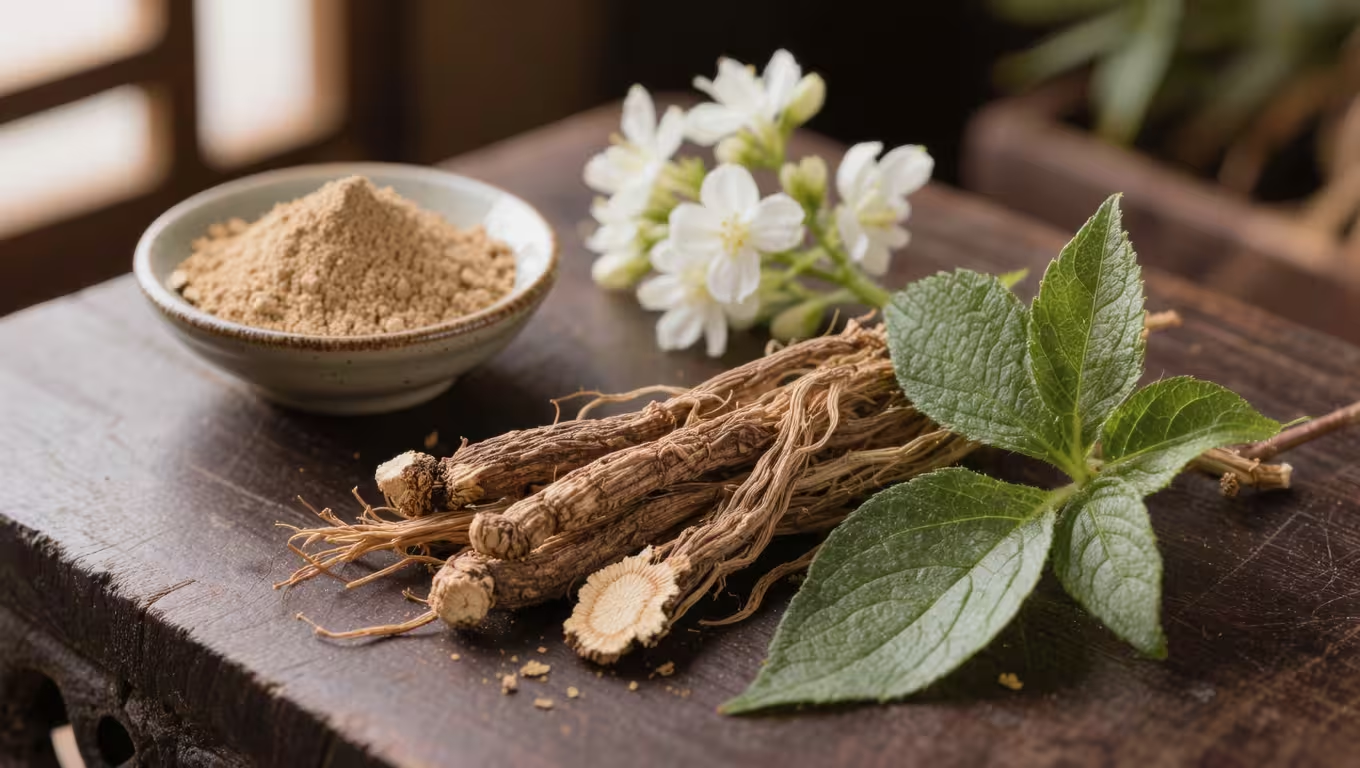
In our detailed exploration of whether Punarnava and Punarnavasma really work for hydrocele, we examined both traditional wisdom and modern research. Here’s what you need to know.
Traditional Properties of Punarnava
In Ayurvedic practice, Punarnava is considered:
- Diuretic – increases urine production and flow, helping eliminate excess fluid
- Anti-inflammatory – reduces swelling in affected tissues
- Analgesic – relieves discomfort
- Antimicrobial – may help prevent secondary infections
- Rejuvenative – supports overall tissue health
These properties make it theoretically ideal for hydrocele. By increasing urine output, it helps the body eliminate excess fluid. By reducing inflammation, it addresses the swelling. And by supporting tissue health, it may prevent future fluid accumulation.
How Punarnava Is Typically Used
If you’re considering Punarnava for hydrocele—ideally under the guidance of a qualified Ayurvedic practitioner—here’s what the traditional approach looks like.
Forms available:
| Form | Description | Typical Use |
|---|---|---|
| Powder (Churna) | Dried Punarnava root powder | 3-6 grams daily with warm water or honey |
| Tablets | Standardized extracts | As directed by manufacturer |
| Decoction (Kadha) | Roots boiled in water | 50-100 ml twice daily |
| Liquid formulations | Fermented herbal preparations | As directed by practitioner |
Dosing considerations:
Ayurvedic treatment isn’t quick. Herbal approaches for chronic conditions like hydrocele are typically prescribed for weeks to months, with periodic assessment. Consistency matters more than intensity.
What Modern Research Says
Let’s be honest: there are no high-quality clinical trials testing Punarnava specifically for hydrocele in humans. The evidence we have is traditional use, practitioner observation, and case reports.
However, research on Punarnava’s general properties is supportive:
- Anti-inflammatory effects have been demonstrated in animal studies published in the Journal of Ethnopharmacology. The herb appears to inhibit certain inflammatory pathways, supporting its traditional use for swelling.
- Diuretic activity is well-documented. A study in Phytotherapy Research confirmed that Punarnava extracts significantly increase urine output in animal models.
- Antimicrobial properties have been shown in lab studies against various bacteria, as documented in the International Journal of Pharmacy and Pharmaceutical Sciences.
The gap, of course, is that showing anti-inflammatory effects in a petri dish isn’t the same as proving that taking Punarnava orally will reduce a specific fluid collection in a human scrotum. The mechanism makes sense. The tradition is long-standing. But rigorous scientific evidence is still lacking.
👉 Ready to try Punarnava? Shop top-rated Punarnava supplements on Amazon
Other Ayurvedic Herbs for Hydrocele
In practice, Punarnava is rarely used alone. It’s often combined with other herbs that work synergistically:
1. Gokshura (Tribulus terrestris)
Gokshura is renowned in Ayurveda for its affinity with the urinary system and reproductive organs. According to research in Andrologia, it has demonstrated diuretic and anti-inflammatory properties that may support kidney function and help balance fluid dynamics in the body.
2. Varun (Crataeva nurvula)
Varun is specifically indicated for urinary tract conditions and fluid retention. Studies in the Journal of Ayurveda and Integrative Medicine have documented its anti-inflammatory and antimicrobial effects, making it valuable for conditions involving fluid retention.
3. Kanchnar (Bauhinia variegata)
Kanchnar is particularly valued for its action on glandular swellings and lymphatic conditions. Research published in the Indian Journal of Pharmaceutical Sciences suggests it helps reduce lymphatic congestion and may be beneficial for chronic hydrocele.
4. Erand (Ricinus communis)
Erand (castor) has anti-inflammatory and antioxidant properties documented in Pharmacognosy Reviews. It supports tissue healing and may help reduce chronic inflammation.
A classic Ayurvedic formulation for hydrocele is Punarnavadi Guggulu, which combines Punarnava with Guggulu (Commiphora mukul) and other supportive herbs. This combination addresses both fluid accumulation and tissue healing.
For those interested in hormonal aspects of male health, our testosterone supplement guide provides context on overall endocrine support.
The Complete Ayurvedic Protocol for Hydrocele
Based on traditional texts and practitioner experience, here’s a comprehensive approach:
1. Internal Herbal Protocol
| Time | Herbs | Purpose |
|---|---|---|
| Morning | Punarnava powder (3g) with warm water | Diuretic, reduces fluid |
| Mid-day | Gokshura capsules or decoction | Supports kidney function |
| Evening | Punarnavadi Guggulu (2 tablets) | Combined action, tissue healing |
Duration: Minimum 2-3 months for mild cases; 4-6 months for chronic conditions.
2. Dietary Recommendations (Pathya)
Ayurveda emphasizes diet as much as herbs. For hydrocele, the focus is on reducing Kapha:
Foods to favor:
- Barley, millet, and oats (light grains)
- Mung dal and other light legumes
- Bitter vegetables like bitter gourd and leafy greens
- Ginger, garlic, turmeric, and black pepper
- Warm water throughout the day
Foods to avoid:
- Heavy, oily, fried foods
- Dairy products (especially cheese and yogurt)
- Cold and refrigerated foods
- Excessive salt
- Alcohol and caffeine
3. Lifestyle Recommendations
Daily routine:
- Light exercise like walking (avoid heavy lifting)
- Yoga poses that support pelvic circulation
- Adequate hydration with warm water
- Stress management through meditation
Specific yoga asanas that may help:
- Sarvangasana (shoulder stand)
- Matsyasana (fish pose)
- Viparita Karani (legs-up-the-wall pose)
- Balasana (child’s pose)
4. External Applications
Some practitioners recommend external applications:
- Warm castor oil packs to the scrotal area (gentle, not vigorous massage)
- Punarnava paste applied externally (under practitioner guidance)
- Contrast hydrotherapy – alternating warm and cool water to the pelvic area
What to Expect: Realistic Timeline
Ayurvedic healing is gradual. Here’s what you might reasonably expect:
| Timeframe | Expected Progress |
|---|---|
| Weeks 1-4 | Increased urination, feeling of lightness, reduced discomfort |
| Weeks 5-8 | Visible reduction in swelling, improved energy |
| Months 3-4 | Significant reduction in fluid, possibly near-normal size |
| Months 5-6 | Consolidation of results, tissue strengthening |
For mild hydroceles, complete resolution within 3-6 months is possible. For moderate cases, significant improvement is realistic. For large, chronic hydroceles, Ayurveda may help manage symptoms and potentially reduce size, but surgery might still be needed.
For inspiration on what’s possible with natural approaches, read my 6-month varicocele healing journey. While different conditions, the principles of consistency and holistic healing apply to both.
Important Caveats and Safety Considerations
Get a Proper Diagnosis First
Not all scrotal swelling is hydrocele. Hernias, tumors, and other conditions can look similar but require completely different treatment. According to the National Center for Biotechnology Information, an ultrasound is definitive for diagnosis. Before trying any natural protocol:
- See a doctor for proper diagnosis
- Confirm it’s actually a hydrocele
- Rule out underlying causes like infection or injury
Understand What Ayurveda Can and Can’t Do
Ayurvedic treatment can:
- Reduce mild to moderate swelling
- Alleviate discomfort
- Prevent complications
- Support overall health
Ayurvedic treatment cannot:
- Reverse large, long-standing hydroceles
- Replace surgery when genuinely needed
- Work instantly – patience is essential
- Guarantee results for everyone
The World Health Organization acknowledges traditional medicine’s role but emphasizes that for large, symptomatic hydroceles, surgery remains the standard of care.
Quality Matters
Herbal supplements aren’t regulated like drugs. The U.S. Pharmacopeia offers third-party testing that adds confidence. Products labeled “Punarnava” might contain:
- The correct herb in the correct part (root vs. whole plant matters)
- The wrong herb entirely (adulteration happens)
- Contaminants like heavy metals or pesticides
- Variable concentrations of active compounds
Look for reputable brands with GMP certification and third-party testing.
Consult a Qualified Practitioner
Ideally, work with a qualified Ayurvedic practitioner who can assess your specific situation. The National Ayurvedic Medical Association provides resources for finding certified practitioners.
Safety Profile of Punarnava
According to a safety review in the Journal of Ayurveda and Integrative Medicine, Punarnava is generally considered safe when used appropriately. However:
- Diuresis is expected – increased urination is normal
- Potassium levels might be affected with long-term use
- Blood pressure could potentially decrease
- Blood sugar might be affected – caution if diabetic
Who should be cautious:
- People taking diuretic medications
- Those on blood pressure medications
- People with kidney disorders
- Pregnant or breastfeeding women
- Anyone scheduled for surgery
Potential drug interactions:
- Diuretics
- Blood pressure medications
- Diabetes medications
- Lithium
Integrating Ayurveda with Conventional Care
The wisest approach combines respect for traditional knowledge with the clarity of modern diagnosis:
| Approach | When Appropriate |
|---|---|
| Ayurvedic treatment alone | Small, asymptomatic hydrocele; after proper diagnosis |
| Ayurveda + monitoring | Mild to moderate hydrocele with regular check-ups |
| Surgery | Large, painful, or rapidly growing hydrocele |
| Ayurveda post-surgery | To prevent recurrence and support healing |
For those interested in the full spectrum of natural approaches to male reproductive health, our varicocele natural solutions guide offers additional context on vascular health and tissue healing.
The Bottom Line
Punarnava and Ayurvedic approaches to hydrocele offer a genuine, time-tested alternative for mild to moderate cases. The herb’s diuretic, anti-inflammatory, and rejuvenative properties align perfectly with what’s needed to address fluid accumulation in the scrotum.
But honesty requires acknowledging the limitations:
- The evidence is traditional, not modern. There are no clinical trials proving efficacy. We have centuries of observational data, practitioner experience, and plausible mechanisms—but not the rigorous studies modern medicine demands.
- Results vary. Some men experience complete resolution. Others see partial improvement. Some may not respond at all.
- Surgery is still necessary for some. If your hydrocele is large, painful, or growing, delaying surgery carries real risks.
For those with small to moderate hydroceles, especially if you’re drawn to holistic approaches and willing to work with qualified practitioners, Punarnava and the Ayurvedic protocol described here are worth considering. The key is to proceed with eyes open—respectful of traditional wisdom, clear about the evidence, and committed to monitoring your progress.
Your health journey is uniquely yours. Whether you choose Ayurveda, conventional medicine, or a combination of both, the goal is the same: a return to comfort, confidence, and well-being.
👉 Ready to explore Ayurvedic options? Shop quality Punarnava and supportive herbs on Amazon