Introduction: Understanding Chronic Orchialgia
Chronic orchialgia—defined as intermittent or constant testicular pain lasting at least three months and significantly bothersome to the patient—affects approximately 2.5% to 5% of all urology consultations and currently impacts about 100,000 men in the United States each year, according to the StatPearls medical reference on orchialgia.
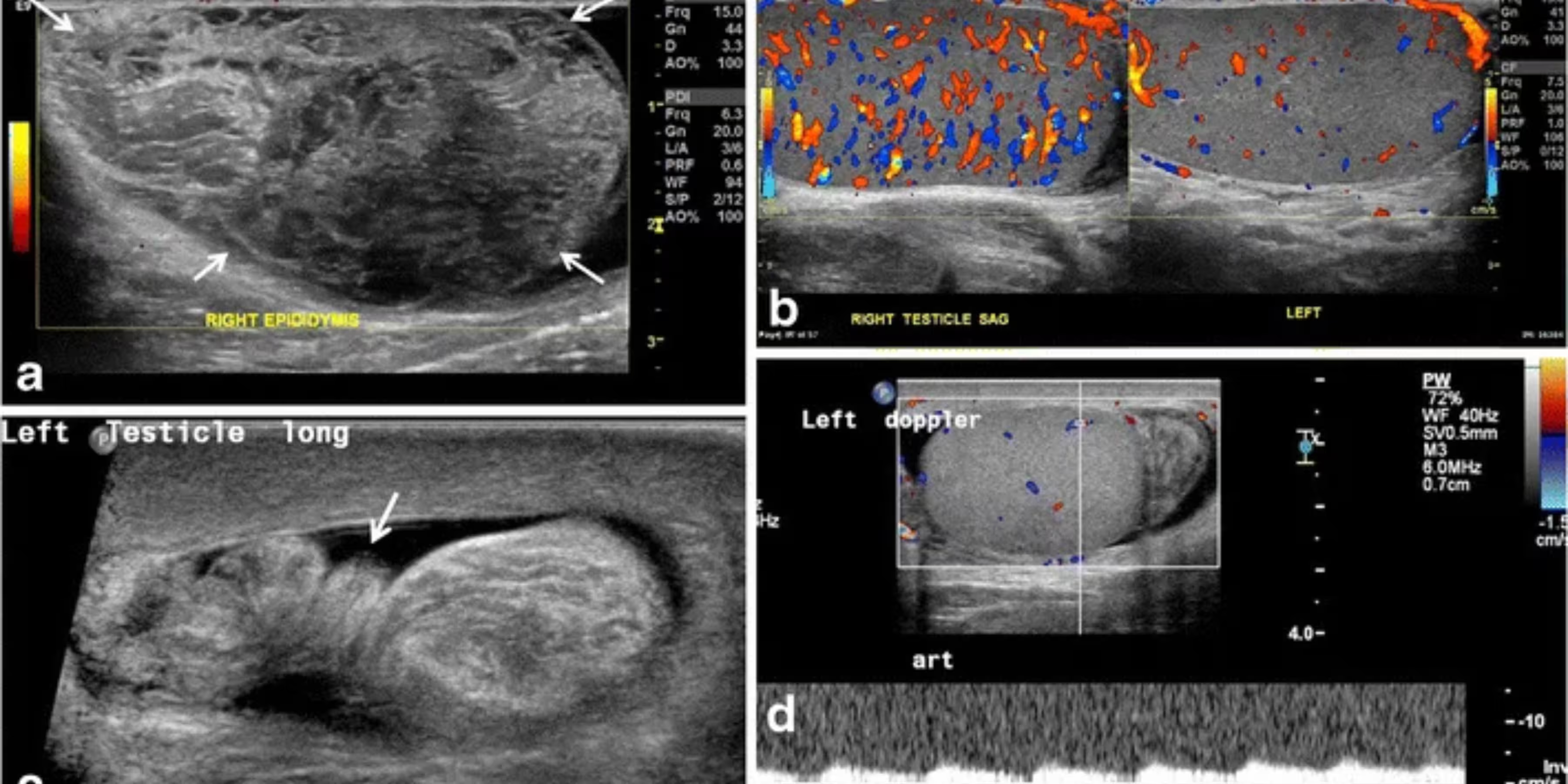
The condition can be frustrating for both patients and physicians. As the same StatPearls article notes, “Evaluation can be confusing as the underlying cause is often idiopathic and conservative therapy is often unsuccessful, making this a challenging condition to diagnose and treat.”
Causes of chronic orchialgia may include:
- Trauma to the testicles or spermatic cord
- Prior surgeries (particularly inguinal hernia repair)
- Infections (epididymitis, orchitis)
- Varicocele or hydrocele
- Nerve entrapment or damage
- Referred pain from kidney stones or spinal issues
- Idiopathic (no identifiable cause)
According to a 2024 PubMed study on post-herniorrhaphy orchialgia, orchialgia can occur after inguinal hernia repair due to “trauma to the spermatic cord, mesh-induced inflammation, vascular insult, fibrosis or mesh scarring of the cord, and neuropathic injury to the autonomic paravasal nerve fibers supplying the testicle.”
For context on related male reproductive conditions, you may find our article on how I got rid of varicocele naturally in 6 months helpful, as many of the anti-inflammatory principles overlap.
Conventional Treatment Approaches
Before exploring natural options, it’s important to understand what conventional medicine offers. A 2025 survey of reproductive urologists published in PubMed found that among conservative treatment options:
- Reassurance (41.5%) and NSAIDs (31.7%) were most frequently ranked as first-line treatments
- Opioid medications were the least preferred option (56.1% ranked them last)
- Microsurgical denervation of the spermatic cord was the most commonly utilized surgical procedure (95.1%)
- For post-vasectomy pain syndrome, 63% chose denervation as their first surgical option
The same survey revealed that physicians perceive higher complete symptom resolution with surgery (median 75% vs. 25% for conservative measures) and lower failure rates (median 10% vs. 20%).
However, many men prefer to exhaust natural and non-invasive options before considering surgery—and this is where homeopathy and natural approaches may offer valuable support.
The Homeopathic Approach to Orchialgia
Homeopathy offers a rich historical tradition of treating testicular pain. Classical homeopathic texts from the 19th century contain detailed observations about remedies for orchitis and testicular discomfort that remain relevant today, as documented in the University of Michigan’s digital collection of Hale’s New Remedies.
According to Oxford University Press’s Integrative Men’s Health textbook, homeopathy offers “another excellent modality to treat aches, sprains related to physical activity and musculoskeletal symptoms” and specifically notes that “men’s health issues including BPH, prostatitis, and testicular disorders may be treated with a homeopathic approach.”
For a broader perspective on homeopathic options for male reproductive health, see our guide on 5 best homeopathic remedies for varicocele treatment without surgery.
Classical Homeopathic Remedies for Testicular Pain
Drawing from historical homeopathic texts, here are the most frequently cited remedies for orchialgia:
1. Clematis Erecta
One of the most frequently mentioned remedies for testicular conditions. Historical texts describe it as “an excellent remedy when the swollen and indurated testicle is painful and sensitive, and a drawing is felt from the testicle along the spermatic cord.” Additional indications include:
- “A crampy and bruised feeling when touched”
- “Drawing and stretching in the lumbar region, thigh, and scrotum”
Clematis is particularly indicated when pain radiates along the spermatic cord and there’s accompanying sensitivity.
2. Rhododendron Chrysanthum
This remedy is specifically noted in Hale’s New Remedies for “chronic indurations of the glands and testes” which “frequently yield permanently to a few doses.” Another text confirms its value for “indurations of long standing” along with Mercurius, Graphites, and Lycopodium.
Rhododendron is often indicated when pain is worse before storms or in cold, damp weather.
3. Pulsatilla and Staphysagria
Historical sources note that “Pulsatilla and Staphysagria, especially the latter, are excellent remedies for an aching pain and drawing-burning stitches in the testes and spermatic cords.”
- Pulsatilla is indicated for “painful drawing and stretching along the spermatic cord to the inflamed testicle, both those organs feeling bruised when touched”
- Staphysagria is particularly suited for individuals with suppressed emotions or after surgical trauma—relevant for post-hernia repair orchialgia
For more on Staphysagria’s role in male health, see our homeopathy for varicocele article.
4. Spongia Tosta
For a specific pain character—”a crampy, contusive, choking pain, with dull stitches striking suddenly through the part, and reaching into the swollen spermatic cord”—Spongia is described in Hale’s text as “the most suitable remedy.” The same source notes that “Spongia, Iodium, positive electricity, and Mezereum, are likewise excellent remedies for induration of the testes.”
5. Mercurius Solubilis
For induration (hardening) of the testicles, one historical text notes: “I have found the second and third trituration of Mercurius solubilis the best remedy for induration of the testicles, though, in some cases, Aurum may deserve a preference over Mercury.”
Mercurius is particularly indicated when there’s accompanying night sweats, salivation, or sensitivity to temperature changes.
6. Aurum Metallicum
Recommended for “indurations of long standing” and specifically for cases “from the abuse of Mercury” along with Cinchona, Nitric acid, and Sulphur according to historical materia medica. Aurum is often indicated for men with a driven, ambitious personality and a tendency toward depression.
7. Arnica Montana
For orchitis resulting from trauma or “contusions of glandular organs, and their consequences,” Arnica is the primary remedy. Historical texts note that “Arnica should be preceded by a dose of Aconite” if inflammation is violent. If Arnica proves insufficient, Rhus tox may be needed.
For testicular pain following injury or surgery, Arnica is invaluable.
8. Conium Maculatum
For “contusions of glandular organs, and their consequences,” Conium is mentioned alongside Calendula as a follow-up remedy in Hale’s text. It’s particularly suited for hard, nodular conditions in glandular tissues.
9. Graphites and Lycopodium
Both are listed among remedies for “indurations of long standing” in classical homeopathic literature. Graphites is often indicated for thick, rough skin and a tendency to skin conditions, while Lycopodium suits men with digestive issues, right-sided symptoms, and a dictatorial demeanor.
10. Sulfur
Mentioned repeatedly for indurations and as a constitutional remedy when other remedies fail to complete the cure, according to historical sources.
Summary of Homeopathic Indications
| Remedy | Key Indications for Testicular Pain |
|---|---|
| Clematis | Pain along spermatic cord, sensitivity, drawing sensation |
| Rhododendron | Chronic induration, worse before storms, cold damp weather |
| Pulsatilla | Bruised feeling, drawing pain, changeable symptoms |
| Staphysagria | Burning stitches, post-surgical, suppressed emotions |
| Spongia | Crampy, choking pain with sudden stitches |
| Mercurius | Induration, night sweats, temperature sensitivity |
| Aurum | Deep-seated induration, driven personality |
| Arnica | Trauma, injury, post-surgical pain |
| Conium | Hard nodules, glandular induration |
| Graphites | Chronic induration, thick skin tendencies |
| Sulfur | Constitutional support, when cure stalls |
How to Use Homeopathic Remedies
Potency selection:
- Acute pain: 30C, repeated as needed (every few hours to twice daily)
- Chronic conditions: 200C or 1M, less frequently (weekly or monthly)
- Constitutional treatment: Under professional guidance, typically high potencies (1M, 10M) at longer intervals
Administration:
- Dissolve 3-5 pellets under the tongue
- Take away from food, drink (except water), and strong flavors (mint, coffee, camphor)
- Allow 15 minutes before or after eating
Important: Classical homeopathy emphasizes individualized prescribing based on the totality of symptoms—not just the diagnosis. The same condition (orchialgia) may require different remedies in different individuals based on pain modality, personality, and accompanying symptoms.
Natural Anti-Inflammatory and Antioxidant Approaches
Modern research has identified several natural compounds with documented benefits for testicular health and pain management.
1. Ginger (Zingiber officinale)
A 2025 study published in the Journal of Experimental and Clinical Anatomy investigated the effects of ginger on testicular parameters following torsion and detorsion in Wistar rats. While the results showed some protective effects, the researchers noted that “the lack of significant differences in several key parameters might be attributed to the experimental conditions, including the dosing regimen, duration of torsion and detorsion and timing of ginger administration.”
Ginger contains gingerols and shogaols—potent anti-inflammatory compounds that may help reduce testicular inflammation. For general anti-inflammatory support, ginger can be consumed as tea, fresh root, or in supplement form (500-1000mg daily).
For more on ginger’s health benefits, see our article on ginger for male health.
2. Rosemary (Rosmarinus officinalis)
A 2022 study in Andrologia examined the “Effects of Rosmarinus officinalis on orchitis following spermatic cord torsion‑detorsion in male mice with emphasis on anti‑inflammatory and antioxidant properties.” The results were impressive:
- In rosemary-treated groups, total antioxidant capacity increased significantly
- Sperm parameters and testosterone levels improved
- Inflammatory gene expression decreased significantly
- The therapeutic dose of 200 mg/kg showed optimal benefits
The researchers concluded that “Rosemary with anti-inflammatory and antioxidant properties accelerates testicular healing in torsion cases.”
3. Ashwagandha (Withania somnifera)
A 2026 randomized, double-blind, placebo-controlled trial published in Food Science & Nutrition evaluated ashwagandha root extract in healthy men aged 50-70. The findings showed testosterone levels significantly increased by 15.7% in the ashwagandha group compared to placebo, and inflammatory markers (CRP) decreased by 51.1%.
For men with orchialgia related to inflammation, ashwagandha’s anti-inflammatory and stress-reducing properties may offer significant benefits. For more details, see our testosterone supplement guide.
4. Pycnogenol (French Maritime Pine Bark Extract)
According to a 2017 study in Minerva Cardioangiologica, Pycnogenol significantly improved symptoms of chronic venous insufficiency, including pain, heaviness, and edema. The mechanism—improved endothelial function and reduced inflammation—is relevant for testicular pain, particularly when associated with varicocele or vascular congestion.
For a detailed exploration of Pycnogenol’s effects, see our article on what happens taking Pycnogenol 50mg twice daily for 6 months.
5. Bromelain
A 2016 review in Biotechnology Research International confirms bromelain’s effectiveness in reducing postoperative swelling and inflammation. For testicular pain following trauma or surgery, bromelain may help reduce edema and accelerate healing.
6. Quercetin
Research in Molecules journal highlights quercetin’s ability to stabilize mast cells and reduce inflammatory mediator release. This makes it particularly valuable for inflammatory conditions of the male reproductive tract, including chronic pelvic pain syndromes.
7. Turmeric (Curcumin)
A comprehensive review in Foods journal confirms curcumin’s ability to modulate multiple inflammatory pathways. A 2024 study in Andrologia found that antioxidant combinations including curcumin improved outcomes in inflammatory conditions affecting male reproductive organs.
For more on anti-inflammatory herbs, see our top supplements for varicocele guide.
Nutritional Support for Testicular Health
Zinc
According to a 2020 review in Nutrients, adequate zinc levels are essential for male reproductive health. Zinc has direct anti-inflammatory properties and supports tissue repair.
Food sources: Pumpkin seeds, oysters, lean meats
Supplement dose: 15-30 mg daily (with copper if long-term)
Vitamin C
The National Institutes of Health Office of Dietary Supplements confirms vitamin C’s essential role in collagen synthesis—crucial for tissue healing after inflammation.
Food sources: Citrus fruits, bell peppers, kiwi
Supplement dose: 500-1000 mg daily
Omega-3 Fatty Acids
A 2022 study in Prostaglandins, Leukotrienes and Essential Fatty Acids suggests that omega-3s may reduce inflammation and support testicular health.
Food sources: Fatty fish, flaxseeds, walnuts
Supplement dose: 1000-2000 mg combined EPA/DHA daily
For dietary guidance, see our foods for male health article.
Physical and Lifestyle Approaches
Scrotal Support and Elevation
According to the Merck Manuals, scrotal elevation and supportive underwear are standard recommendations for reducing testicular discomfort and swelling.
Temperature Management
Heat can exacerbate inflammation. Applying ice packs (wrapped in cloth) for 15-20 minutes several times daily may help reduce acute pain. Conversely, some men with chronic pain benefit from warm baths to relax pelvic muscles—individual experimentation is key.
Pelvic Floor Physical Therapy
A 2021 study in Neurourology and Urodynamics found that pelvic floor physical therapy significantly reduced pain in men with chronic pelvic pain syndromes, including testicular pain.
Stress Reduction and Mind-Body Approaches
Chronic pain activates stress pathways, which in turn increase inflammation and pain perception—a vicious cycle. The 2022 review in the International Journal of Molecular Sciences noted that stress management is an important component of any natural approach to male reproductive health.
Effective techniques:
- Mindfulness meditation
- Deep breathing exercises
- Yoga (gentle poses)
- Cognitive behavioral therapy (CBT)
Integrating Natural and Conventional Approaches
| Approach | When Appropriate |
|---|---|
| Homeopathy alone | Mild, chronic, idiopathic orchialgia |
| Herbal anti-inflammatories | As adjunct to conventional care, for inflammation-dominant pain |
| Nutritional support | Always, as foundation |
| Physical therapy | When musculoskeletal or pelvic floor factors are involved |
| Conventional treatment | For acute infections, severe pain, surgical emergencies |
| Combination approach | Most cases benefit from integrated care |
Sample Integrative Protocol
Morning:
- Anti-inflammatory supplements (ginger, turmeric) with breakfast
- Gentle stretching or yoga
Throughout day:
- Scrotal support underwear
- Ice packs if needed (15 min intervals)
- Stay hydrated, avoid prolonged sitting
Evening:
- Homeopathic remedy (based on individual symptoms)
- Warm bath if helpful
- Magnesium for muscle relaxation
Ongoing:
- Anti-inflammatory diet
- Stress management practice
- Regular follow-up with healthcare provider
For inspiration on what’s possible with natural approaches, read my 6-month healing journey. While for a different condition, the principles of patience, consistency, and holistic healing apply to orchialgia as well.
Important Caveats and Safety Considerations
When to Seek Immediate Medical Care
The StatPearls article on orchialgia emphasizes that sudden, severe testicular pain requires immediate medical attention to rule out testicular torsion, which must be treated within hours to save the testicle.
Red flags requiring emergency evaluation:
- Sudden onset of severe pain
- Nausea, vomiting, or fever with pain
- Abdominal pain radiating to testicle
- Recent trauma
- Inability to distinguish testicle on exam
Get a Proper Diagnosis First
Before starting any natural protocol, a proper urological evaluation is essential to:
- Rule out serious causes (torsion, tumor, infection)
- Identify treatable underlying conditions
- Establish a baseline for monitoring progress
- Ensure natural approaches don’t delay necessary treatment
Homeopathy Safety
According to the National Center for Complementary and Integrative Health, homeopathic remedies are generally considered safe when properly prepared, as they are highly diluted. However:
- Always consult a qualified homeopath for constitutional prescribing
- Do not discontinue prescribed medications without medical supervision
- Report any worsening of symptoms to your healthcare provider
Supplement Safety Considerations
| Supplement | Caution |
|---|---|
| Ginger, turmeric | May increase bleeding risk; caution with blood thinners |
| Ashwagandha | Avoid with thyroid medication, sedatives; caution with autoimmune disease |
| Pycnogenol | May interact with blood thinners, immunosuppressants |
| Zinc | High doses interfere with copper absorption |
| Vitamin C | High doses may cause digestive upset |
Always consult a healthcare provider before starting any supplement regimen, especially if you’re taking other medications or have underlying health conditions.
The Bottom Line
Chronic orchialgia is a challenging condition that affects thousands of men. While conventional medicine offers effective surgical options for severe cases, many men prefer to explore natural and homeopathic approaches first—and for good reason.
What the evidence supports:
| Approach | Evidence Level | Best For |
|---|---|---|
| Classical homeopathy | Historical + clinical experience | Individualized, constitutional treatment |
| Herbal anti-inflammatories | Moderate (ginger, rosemary, turmeric) | Inflammation-dominant pain |
| Antioxidant supplements | Moderate (zinc, vitamin C, Pycnogenol) | Oxidative stress, tissue healing |
| Nutritional support | Strong foundation | All cases |
| Physical therapy | Emerging | Musculoskeletal factors |
| Stress reduction | Strong supportive | All chronic pain |
The homeopathic tradition offers a rich materia medica for testicular conditions, with remedies like Clematis, Rhododendron, Staphysagria, and Spongia having specific indications that match the pain patterns many men experience.
Modern research supports the use of anti-inflammatory herbs like ginger, rosemary, and turmeric, along with antioxidants like Pycnogenol, quercetin, and zinc. These natural compounds can be combined thoughtfully to create a comprehensive protocol addressing inflammation, oxidative stress, and tissue healing.
The key is integration—using natural approaches to support, not replace, appropriate medical care. With proper diagnosis, professional guidance, and consistent application, many men find significant relief from chronic orchialgia through natural means.
As always, your health journey is unique. Whether you choose homeopathy, herbal medicine, conventional treatment, or a combination, the goal is the same: return to comfort, confidence, and quality of life.
👉 Ready to explore natural options for testicular pain? Shop quality supplements and homeopathic remedies on Amazon