
If you’ve been researching natural approaches to varicocele, you’ve likely encountered two names repeatedly: Pycnogenol and grape seed extract. Both are rich in proanthocyanidins—powerful antioxidants with a special affinity for the vascular system. Both have been studied for venous disorders. And both are often recommended for men dealing with varicocele-related concerns.
But here’s the question that actually matters: which one is better?
It’s not a simple answer. These two supplements are like cousins rather than twins—they share important family characteristics but have distinct personalities. Pycnogenol is a patented extract from French maritime pine bark with decades of clinical research. Grape seed extract comes from—you guessed it—grape seeds and has its own substantial body of evidence.
This article provides a head-to-head comparison based on the available science. We’ll look at their mechanisms, what research specifically supports for varicocele, their strengths and limitations, and how to choose between them based on your individual situation.
Let’s start by understanding what these compounds actually are.
First, Understanding Proanthocyanidins
Both Pycnogenol and grape seed extract belong to a class of compounds called proanthocyanidins (also known as oligomeric proanthocyanidins or OPCs). These are complex flavonoids with potent antioxidant properties.
What makes them particularly relevant for varicocele is their affinity for blood vessels. Proanthocyanidins:
- Strengthen capillary walls by protecting collagen and elastin
- Reduce capillary permeability and fragility
- Scavenge free radicals that damage vascular endothelium
- Inhibit enzymes that break down the extracellular matrix
- Improve venous tone
A 2020 systematic review noted that phlebotonics—a group of venoactive compounds including both Pycnogenol and grape seed extract—may reduce edema, pain, and lower-leg swelling associated with venous disorders.
But while they share these general properties, the specific compounds and research supporting each differ in important ways.
Pycnogenol: The Patented Pine Bark Extract
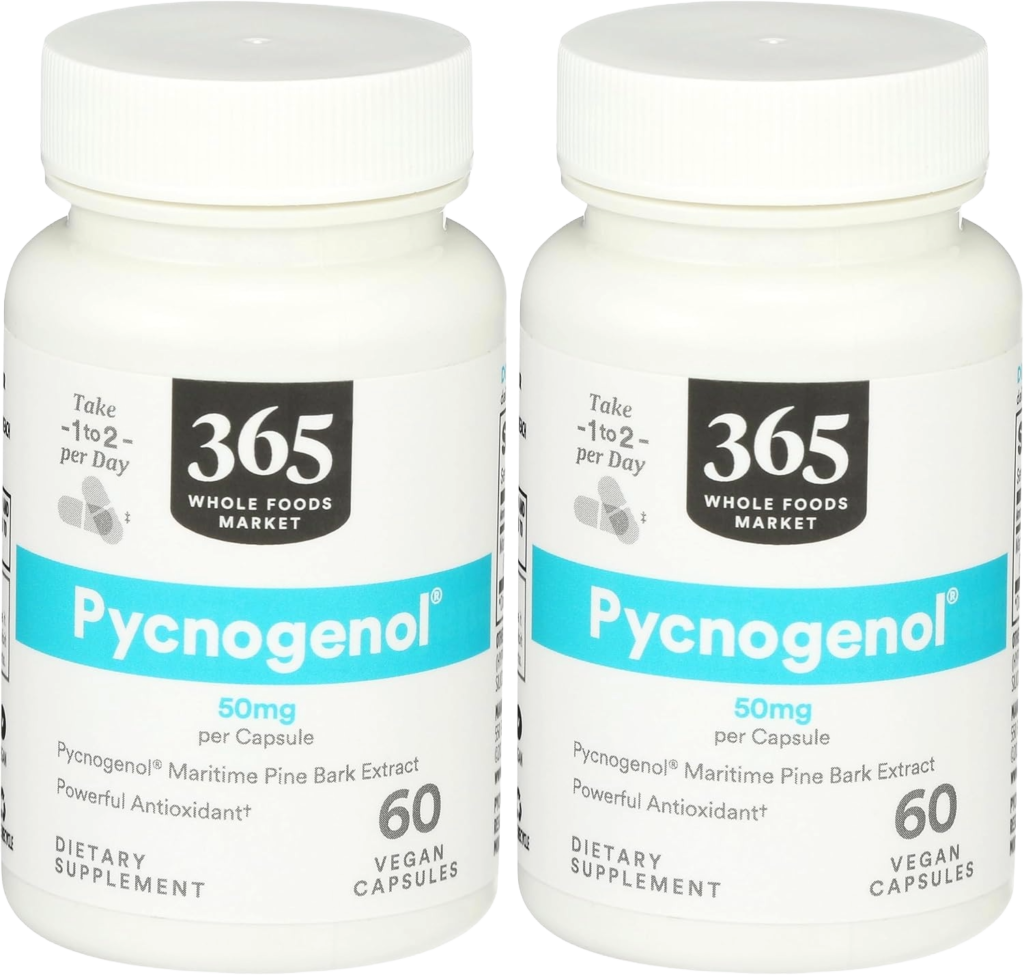
What it is: Pycnogenol is a registered trademark for a specific extract from the bark of the French maritime pine (Pinus pinaster). It’s not just any pine bark—it’s a standardized product with over 30 years of research and a patented extraction process.
Chemical composition: Pycnogenol contains a complex mixture of proanthocyanidins, plus other bioactive compounds including phenolic acids, terpene lactones, and organic acids that aren’t found in grape seed extract. This unique combination is thought to contribute to its distinct biological activities.
Bioavailability: Pycnogenol has been shown to have relatively high bioavailability. The standardized extraction process and specific composition may contribute to better absorption in the body.
Research for venous conditions: Multiple clinical studies support Pycnogenol for venous disorders:
- A double-blind study found that Pycnogenol (100mg three times daily for 2 months) significantly improved leg heaviness and subcutaneous edema in patients with chronic venous insufficiency. Venous pressure was also significantly reduced.
- The same study noted that Pycnogenol was effective “probably by either stabilizing the collagenous subendothelial basal membrane or scavenging the free radicals, or by a combination of these activities.” Clinically, capillary leakage, perivascular inflammation, and subcutaneous edema were all reduced.
- Research indicates that Pycnogenol can increase forearm blood flow by 42% after just two weeks of supplementation, demonstrating its effects on endothelial function.
Safety: Pycnogenol has an excellent safety profile with few side effects reported in clinical trials. The 2017 study noted that “the safety of use of Pycnogenol is demonstrated by the lack of side effects or changes in blood biochemistry and hematologic parameters”.
Read More What Happens If You Take Pycnogenol 50mg Two Times a Day for Varicocele for 6 Months?.
If you’re considering either supplement for varicocele support, choosing quality products matters. Click here to see the top-rated Pycnogenol on Amazon →
Grape Seed Extract: The Polyphenol Powerhouse
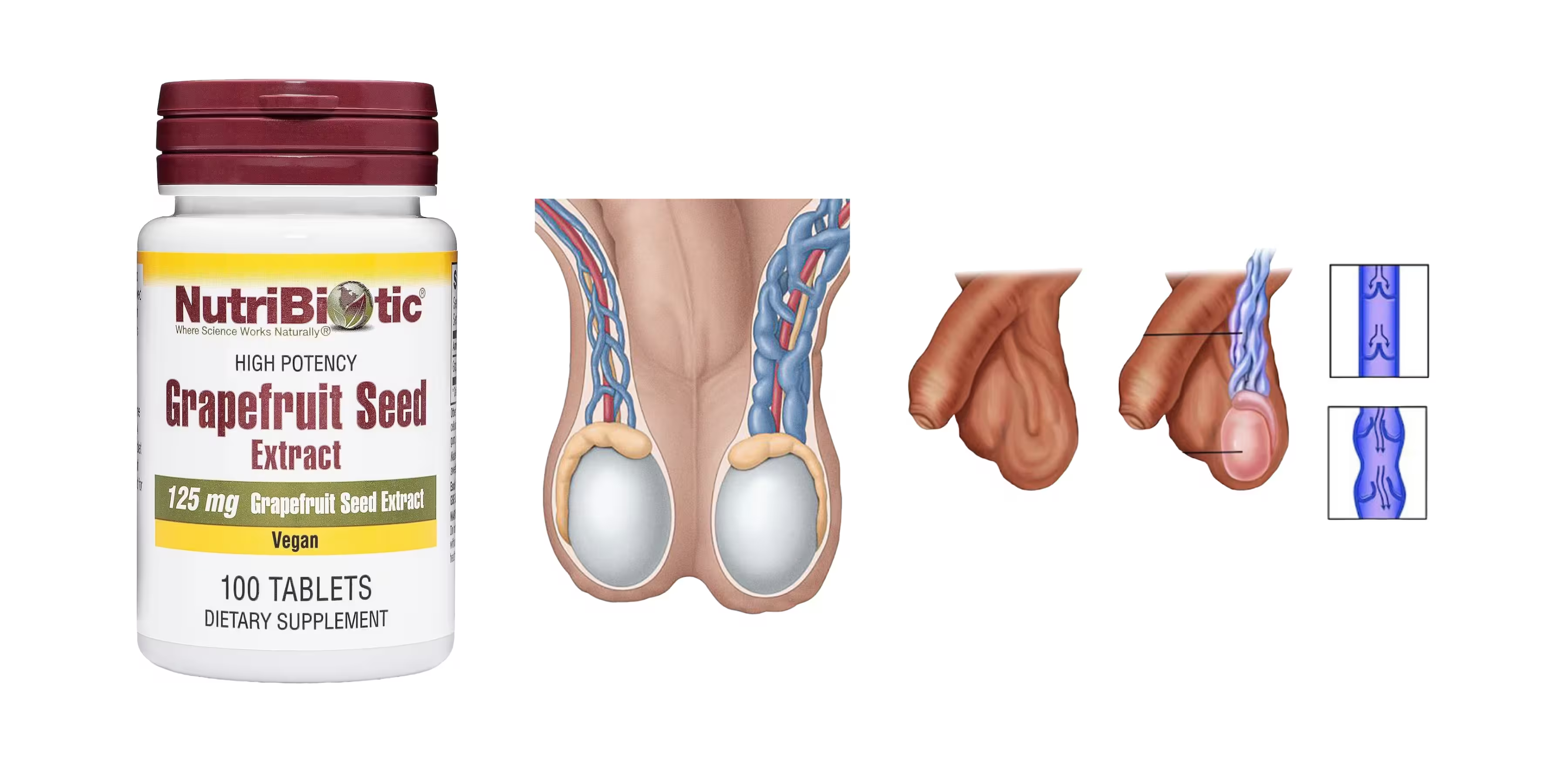
What it is: Grape seed extract is derived from the small seeds of red grapes (Vitis vinifera)—the same kind pressed to make wine. It’s rich in flavonoids, particularly proanthocyanidins.
Chemical composition: Grape seed extract is rich in proanthocyanidins made up of oligomeric and polymeric units of flavan-3-ols. It may also contain other phenolic compounds such as phenolic acids and flavonols.
Direct evidence for varicocele: Here’s where grape seed extract has a significant advantage—there’s specific animal research examining its effects on varicocele.
A 2018 study published in Molecular Medicine Reports investigated grape seed proanthocyanidin extract (GSPE) in rats with surgically induced varicocele. The findings were remarkable:
- After 4 weeks of GSPE administration, the decreased sperm count and motility caused by varicocele were significantly improved
- Pathological changes in testicular tissue were alleviated
- Reduced antioxidant enzyme activity (superoxide dismutase and glutathione peroxidase) was partially restored
- Elevated oxidative stress levels decreased
- Apoptosis (programmed cell death) in testicular tissue was reduced
The study also uncovered the mechanism: GSPE activated the Nrf2 pathway, which is a key antioxidant defense system in cells. By activating Nrf2, GSPE increased the production of protective enzymes that neutralize oxidative damage.
The researchers concluded that “GSPE can ameliorate abnormal spermatogenesis and testicular injury in varicocele rats, potentially due to its antioxidative activity and ability to activate the Nrf2 pathway”.
Evidence for venous conditions: Beyond the specific varicocele research, grape seed extract has been studied for venous disorders. A monograph on grape seed notes that randomized controlled trials have documented the effectiveness of OPCs from grape seed in relieving symptoms of chronic venous insufficiency. Grape seed extract has been used by natural practitioners in Europe to treat venous insufficiency and promote wound healing.
Safety: Grape seed extract appears well-tolerated with few side effects noted in available literature, though long-term studies are lacking.
Quality grape seed extract should be standardized to 95% proanthocyanidins. Check top-rated options on Amazon →
Head-to-Head Comparison: Key Factors
1. Direct Varicocele Evidence
| Factor | Pycnogenol | Grape Seed Extract |
|---|---|---|
| Direct varicocele studies | None identified | Yes (2018 rat study) |
| CVI studies | Multiple clinical trials | Multiple clinical trials |
| Mechanism research | Well-established | Well-established, including Nrf2 pathway |
This is the most significant difference. While Pycnogenol has excellent research for venous insufficiency generally, grape seed extract has a specific study demonstrating its effects on varicocele-induced testicular damage.
2. Mechanism of Action
Both work through antioxidant and vascular-protective mechanisms, but there may be differences:
- Pycnogenol appears particularly effective at improving endothelial function and reducing capillary permeability. The CVI study noted reduced perivascular inflammation and subcutaneous edema.
- Grape seed extract specifically activates the Nrf2 pathway, which orchestrates the body’s entire antioxidant defense system. This could provide broader protection against oxidative stress.
3. Standardization and Consistency
- Pycnogenol is a patented, trademarked ingredient with strict quality control. Every batch contains consistent levels of active compounds, which means the research is directly applicable to products containing genuine Pycnogenol.
- Grape seed extract is not a single standardized product. Quality and potency can vary significantly between brands. Look for extracts standardized to 95% proanthocyanidins for the best quality.
4. Bioavailability
Pycnogenol may have an advantage here. It has been shown to have relatively high bioavailability, with its components able to cross cell membranes more easily due to smaller molecular weights. Grape seed extract’s bioavailability can vary depending on the extraction method and formulation.
5. Cost
Generally, Pycnogenol is more expensive than grape seed extract because it’s a patented, branded ingredient with extensive research backing. Grape seed extract is widely available at lower price points, though quality varies.
Which One Should You Choose?
Based on the evidence, here’s a framework for deciding:
Choose Pycnogenol if:
- You want the most extensively researched ingredient for venous health generally
- You’re willing to pay more for a patented, standardized product
- Your primary concerns are symptoms like heaviness, swelling, or discomfort
- You value the extensive clinical safety data
Choose Grape Seed Extract if:
- You want the ingredient with specific research for varicocele-induced testicular damage
- You’re concerned about fertility parameters (sperm count and motility)
- You’re looking for a more budget-friendly option
- You understand the importance of choosing a quality brand (standardized to 95% proanthocyanidins)
Consider using both: Some experts suggest that since these extracts have different compositions and mechanisms, combining them may potentially offer enhanced benefits. A comparative analysis notes that they can be used together, though it’s always advisable to consult a healthcare professional before combining supplements.
Practical Dosage Recommendations
Pycnogenol:
- For venous support: 100-150mg daily, often divided into 2-3 doses
- The CVI study used 100mg three times daily for 2 months
- Typical maintenance: 50-100mg daily
Grape Seed Extract:
- Look for extracts standardized to 92-95% proanthocyanidins
- General dosage: 100-300mg daily
- For therapeutic effects: 100mg three times daily
- The rat study used the equivalent of approximately 2-3mg per pound of body weight
Both should be taken consistently for at least 8-12 weeks to assess effects, as antioxidant protection builds over time.
Important Caveats and Realistic Expectations
What these supplements can do:
- Reduce oxidative stress in testicular tissue
- Improve vascular function and blood flow
- Potentially improve sperm parameters (supported by grape seed research)
- Alleviate symptoms like discomfort and heaviness
What they cannot do:
- Reverse anatomical varicocele (dilated veins may persist)
- Replace surgery for severe cases
- Work overnight—effects take time
- Guarantee results for everyone
A 2025 study on Lycium barbarum for varicocele showed significant improvements after 90 days of antioxidant treatment—similar timelines likely apply to both Pycnogenol and grape seed extract.
Also worth noting: a 1999 USDA study found enormous variability in the antioxidant capacity of commercial supplements—a 525-fold difference among grape seed and pine bark products . This underscores the importance of choosing quality brands with third-party testing.
The Bottom Line
Both Pycnogenol and grape seed extract are excellent natural options for supporting vascular health and reducing oxidative stress in varicocele. They share core mechanisms but have distinct profiles:
Pycnogenol offers the advantage of being a patented, standardized ingredient with extensive clinical research for venous insufficiency and excellent bioavailability. It’s the “luxury” option—well-researched, consistent, but more expensive.
Grape seed extract has the specific advantage of direct varicocele research demonstrating improved sperm parameters and activation of the Nrf2 antioxidant pathway. It’s more budget-friendly but requires careful brand selection to ensure quality.
For men concerned primarily about fertility parameters, the direct varicocele research gives grape seed extract a slight edge. For those focused on symptom relief and vascular health generally, Pycnogenol’s extensive clinical data is compelling.
The honest answer? You probably can’t go wrong with either, provided you choose quality products and maintain realistic expectations. Some may even benefit from combining them, as their different compositions could work synergistically.
As always, consult a healthcare provider before starting any supplement regimen, especially if you’re considering higher doses or combination approaches.