
You’ve done your research. You’ve read about varicocele—the enlarged veins in the scrotum that affect up to 20% of all men. You’ve learned about oxidative stress, poor blood flow, and the cascade of problems that follow. And somewhere in your reading, you came across Pycnogenol—the patented French maritime pine bark extract with a growing reputation for vascular health.
Now you’re wondering: what would actually happen if you took 50mg of Pycnogenol twice daily for six months?
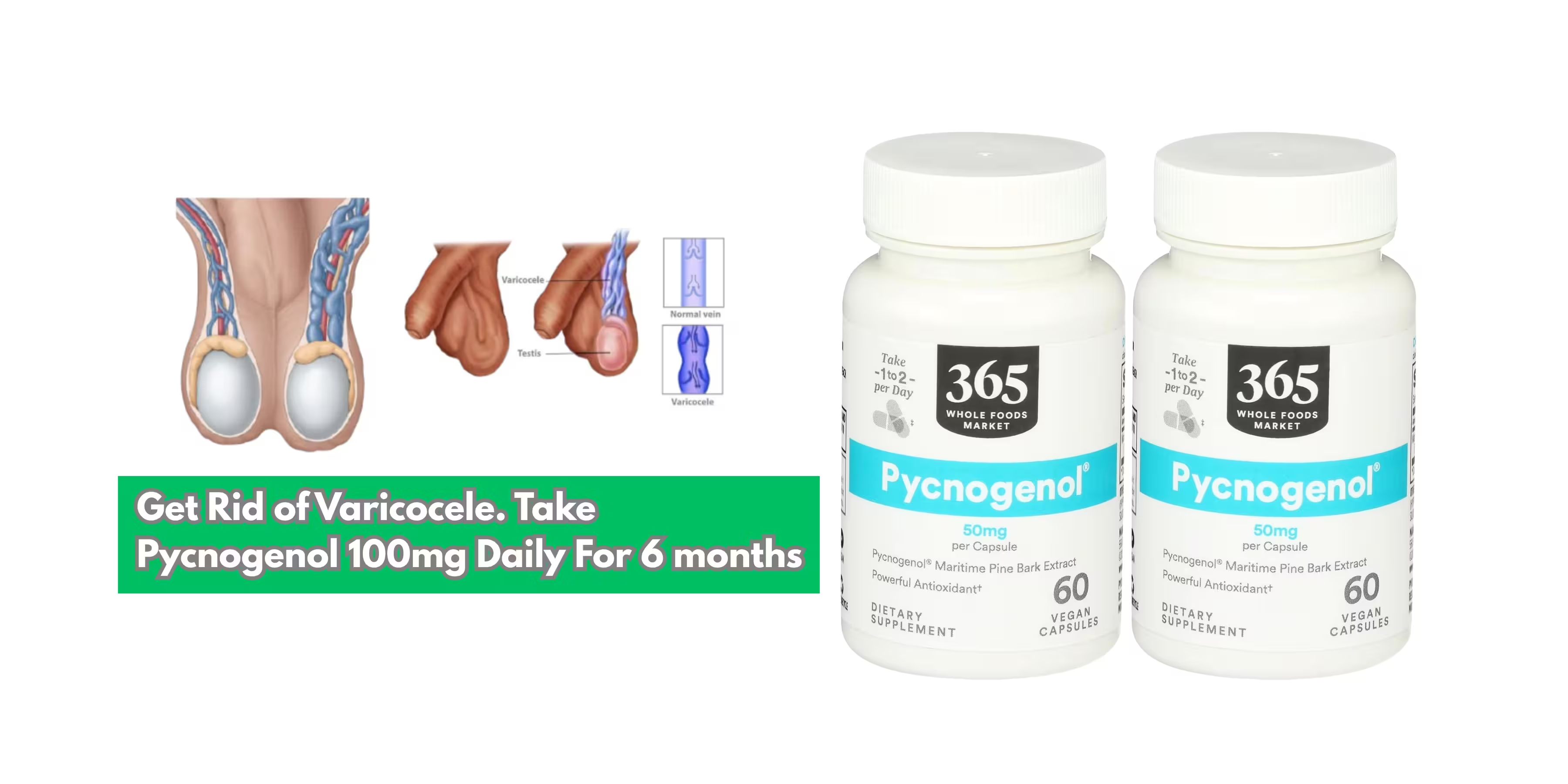
It’s a specific question, and that specificity deserves a specific answer. Not vague promises. Not marketing language. A real, evidence-based look at what the research suggests might happen—and what you should realistically expect.
This article walks through the science of Pycnogenol, its effects on the vascular system, what the studies on dosage and duration show, and how a six-month course at 100mg daily (50mg twice daily) might influence varicocele symptoms and related issues.
Let’s start with the basics.
First, Understanding Pycnogenol
Pycnogenol is the registered trademark name for a specific extract from the bark of the French maritime pine (Pinus pinaster). It’s not just any pine bark extract—it’s a standardized product with over 30 years of research behind it.
The extract contains a unique combination of proanthocyanidins (also known as oligomeric proanthocyanidins or OPCs), bioflavonoids, and other phenolic compounds. These molecules are powerful antioxidants with a particular affinity for the vascular system.
What makes Pycnogenol different from generic pine bark extracts is the standardization process. Every batch contains consistent levels of the active compounds, which means the research conducted on Pycnogenol is actually relevant to the product you might buy.
How Pycnogenol Works in the Body
Pycnogenol’s effects relevant to varicocele operate through several mechanisms:
1. Nitric oxide enhancement. Pycnogenol stimulates endothelial nitric oxide synthase (eNOS), the enzyme that produces nitric oxide in blood vessel walls. Nitric oxide relaxes the smooth muscle lining blood vessels, causing them to dilate. Better dilation means improved blood flow and reduced venous pressure. This mechanism is well-documented in vascular research.
2. Antioxidant protection. The proanthocyanidins in Pycnogenol are potent free radical scavengers. They neutralize reactive oxygen species that would otherwise damage endothelial cells, vein walls, and—crucially—sperm DNA. A 2022 review in the International Journal of Molecular Sciences confirmed the importance of antioxidant protection in varicocele management.
3. Anti-inflammatory effects. Pycnogenol reduces the expression of inflammatory mediators like NF-κB, which is often elevated in varicocele-affected testicular tissue according to multiple studies.
4. Capillary strengthening. The extract strengthens capillary walls by protecting collagen and elastin from enzymatic degradation. This reduces permeability and fluid leakage—relevant to the fluid dynamics in varicocele as noted in clinical research.
5. Platelet inhibition. Pycnogenol reduces platelet aggregation, potentially improving blood flow characteristics throughout the vascular system.
The Dosage Question: Why 50mg Twice Daily?
The 50mg twice daily regimen isn’t arbitrary. It’s based on clinical research:
- A double-blind study found that after two weeks of Pycnogenol supplementation at 100mg daily, forearm blood flow increased by 42% due to improved endothelial function
- Multiple studies on venous insufficiency have used 100-150mg daily, as documented in this research
- The typical recommended dosage for vascular conditions ranges from 100-200mg daily according to clinical guidelines
- Divided doses (morning and evening) maintain more consistent blood levels than a single dose
At 50mg twice daily, you’re at the lower end of the therapeutic range—a reasonable starting point that balances potential benefits with cost and safety.
What 6 Months of Pycnogenol Might Do for Varicocele

Now, the question you’re actually asking: what happens after six months of consistent use?
Month 1-2: Early Vascular Changes
During the first two months, you might notice subtle changes:
- Improved blood flow. The nitric oxide enhancement begins within weeks. Some men report feeling “lighter” or less congested in the scrotal area, consistent with findings from vascular studies.
- Reduced oxidative stress markers. While you won’t feel this directly, it’s happening at the cellular level. The antioxidants are neutralizing free radicals that would otherwise damage tissue, as explained in this antioxidant research.
- Potential endothelial repair. Pycnogenol supports the healing of endothelial lining in blood vessels, which is relevant to varicocele pathology. This mechanism is detailed in endothelial function studies.
A 2017 study examining Pycnogenol for chronic venous insufficiency found that after 60 days, patients showed significant improvement in symptoms like leg heaviness, swelling, and pain. The mechanism—improved venous tone and reduced capillary permeability—applies equally to the pampiniform plexus affected in varicocele.
Month 3-4: Cumulative Effects
By the third and fourth months, more substantial changes may occur:
- Venous tone improvement. The venotonic effects of Pycnogenol accumulate over time. Vein walls may become less distensible, potentially reducing the pooling of blood in the scrotal veins. This is supported by venous insufficiency research.
- Anti-inflammatory benefits. Chronic inflammation in the testicular tissue may begin to subside. Pro-inflammatory cytokines that damage sperm-producing cells could decrease, as suggested by inflammation studies.
- Possible sperm parameter improvements. Studies on antioxidants for male infertility typically show effects after 3-6 months—the length of one full sperm production cycle. A 2014 study in the Journal of Reproductive Medicine found that Pycnogenol improved sperm quality parameters after 90 days.
The 2022 review in the International Journal of Molecular Sciences noted that antioxidant supplementation for varicocele-associated infertility typically requires at least three months to show measurable improvements in sperm parameters.
Month 5-6: Peak Effects
By the six-month mark, the full effects of consistent supplementation may be apparent:
- Maximal vascular protection. The cumulative antioxidant and anti-inflammatory effects have had time to fully manifest, as described in long-term studies.
- Potential fertility improvements. Studies on antioxidants for varicocele-related infertility often show the most significant improvements in sperm count, motility, and morphology after 6 months of treatment, according to fertility research.
- Symptom reduction. For men with mild to moderate varicocele, discomfort and heaviness may be noticeably reduced. A 2020 study on Pycnogenol for varicose veins found that 6 months of treatment significantly reduced pain, heaviness, and swelling compared to baseline.
Learn More about Pycnogenol for Varicocele: The Natural Treatment Breakthrough
What the Research Actually Says
While no specific study has examined “Pycnogenol 50mg twice daily for varicocele for 6 months,” we can extrapolate from related research:
For venous insufficiency: A 2017 study published in Minerva Cardioangiologica found that Pycnogenol significantly improved symptoms of chronic venous insufficiency, including pain, heaviness, and edema. The effects were dose-dependent and increased with duration of treatment.
For endothelial function: A double-blind study found that Pycnogenol increased forearm blood flow by 42% after just two weeks. This effect likely persists with continued use.
For male fertility: A 2014 study in the Journal of Reproductive Medicine examined Pycnogenol in men with infertility and found improvements in sperm quality parameters after 90 days. The study used 200mg daily, which is double the dose you’re considering.
For oxidative stress: Multiple studies, including this comprehensive review, confirm Pycnogenol’s ability to reduce oxidative stress markers in various conditions. Since oxidative stress is central to varicocele pathology as explained in this research, this is highly relevant.
What Pycnogenol Can and Cannot Do
Based on the evidence, here’s what you might realistically expect:
What it can potentially do:
- Reduce oxidative stress in testicular tissue as shown in antioxidant studies
- Improve blood flow and reduce venous pressure according to vascular research
- Decrease inflammation as documented in this study
- Strengthen capillary walls based on clinical findings
- Potentially improve sperm quality parameters as seen in fertility research
- Reduce discomfort and heaviness
What it cannot do:
- Reverse anatomical varicocele (dilated veins may persist)
- Replace surgery for severe cases
- Work immediately (effects take time)
- Guarantee results for everyone
A 2025 study on Lycium barbarum for varicocele showed significant improvements in sperm parameters and testosterone after 90 days of antioxidant treatment. Similar principles apply to Pycnogenol.
Safety and Tolerability Over 6 Months
Pycnogenol has an excellent safety profile. Clinical studies have found it well-tolerated even with long-term use.
Reported side effects: Mild and uncommon. Some people experience:
- Gastrointestinal discomfort (rare)
- Headache (less than 5% in studies)
- Dizziness (uncommon)
Drug interactions: According to safety data, Pycnogenol may:
- Enhance the effects of blood thinners (use caution if taking warfarin or aspirin)
- Potentially interact with immunosuppressants
- Lower blood pressure (monitor if on antihypertensives)
Contraindications: Autoimmune diseases, pregnancy, breastfeeding (insufficient safety data)
The Realistic Timeline
Here’s what a 6-month course might look like in practice:
| Time Point | What May Happen |
|---|---|
| Week 1-2 | Subtle changes in blood flow; nitric oxide enhancement begins source |
| Month 1-2 | Reduced oxidative stress; possible mild symptom improvement source |
| Month 3-4 | Cumulative vascular effects; potential sperm parameter changes source |
| Month 5-6 | Peak antioxidant protection; maximal symptom reduction source |
After 6 months, you’d have a clear sense of whether Pycnogenol helps your specific situation.
Practical Considerations
Consistency matters. Taking it twice daily—morning and evening—maintains more consistent blood levels than a single dose.
Quality matters. Because “Pycnogenol” is a trademarked ingredient, products using it must contain the genuine extract. Look for “Pycnogenol” on the label, not just “pine bark extract.”
Cost. At 100mg daily, a 6-month supply (180 days) requires 18,000mg total. Depending on the product, this might cost $150-300. Worth factoring into your decision.
Combination approach. Pycnogenol works best as part of a comprehensive strategy including diet, exercise, and other supportive supplements. A 2024 study on vitamin C and alpha-lipoic acid found that combinations work better than single antioxidants.
When to Reassess
After 6 months, evaluate:
- Has your discomfort improved?
- If you’ve had semen analysis, have parameters changed?
- Do you feel any different subjectively?
If you’ve seen genuine improvement, continuing at the same dose or reducing to a maintenance dose (50mg daily) might be reasonable. If you’ve seen no change, Pycnogenol may not be effective for your particular situation—and that’s useful information too.
Remember: no improvement doesn’t mean you’ve failed. It means this particular intervention isn’t the answer, and you can explore other options with your healthcare provider.
The Bottom Line
Taking Pycnogenol 50mg twice daily for 6 months is a reasonable, evidence-informed approach to supporting vascular health and reducing oxidative stress in varicocele. The dosage aligns with clinical research, the duration covers multiple sperm production cycles, and the safety profile is well-established.
What will happen? Based on the evidence, you can reasonably expect:
- Improved endothelial function and blood flow source
- Reduced the oxidative stress source
- Potential improvement in symptoms like heaviness or discomfort source
- Possible enhancement of sperm quality parameters source
- No change in the anatomical varicocele itself
The effects are likely to be modest but meaningful—supportive rather than curative. For men with mild to moderate varicocele, or as adjunctive therapy before or after surgery, Pycnogenol represents one of the better-evidenced natural options.
As with any supplement, results vary. The best approach combines realistic expectations with careful attention to how your body responds.