
Walk through the supplement aisle and you’ll see countless products promising to boost testosterone, increase libido, and restore male vitality. Most rely on marketing more than evidence. But every so often, a ingredient emerges that actually has clinical research behind it.
Testofen is one of those ingredients.
It’s not a mysterious herb from some remote corner of the world. It’s actually fenugreek—Trigonella foenum-graecum—a plant you might recognize from Indian cooking or as a supplement for blood sugar support. But Testofen isn’t just any fenugreek. It’s a patented, standardized extract developed by Gencor Pacific, designed specifically for male health .

The difference matters. Standardized extracts ensure you’re getting consistent amounts of the active compounds—in this case, a proprietary matrix of saponin glycosides that Gencor calls Fenuside™ . This standardization is what allows for meaningful clinical research.
Over the past decade, multiple human trials have examined Testofen’s effects on testosterone, sexual function, and age-related symptoms in men. The results are interesting enough that Testofen has become one of the more evidence-backed ingredients in the men’s health space.
Let’s look at what the research actually shows.
If you’re considering trying Testofen for testosterone support, choosing a quality product matters.
What Is Testofen?
Testofen is a specialized extract from fenugreek seeds (Trigonella foenum-graecum). Unlike basic fenugreek powder you might find in a spice rack, Testofen is processed to concentrate specific compounds—particularly the steroidal saponins that are thought to influence hormone-related pathways .
The extract is standardized to contain a consistent level of these active constituents, which is crucial for both research and real-world use. When you take Testofen, you’re getting a predictable dose of the compounds studied in clinical trials .
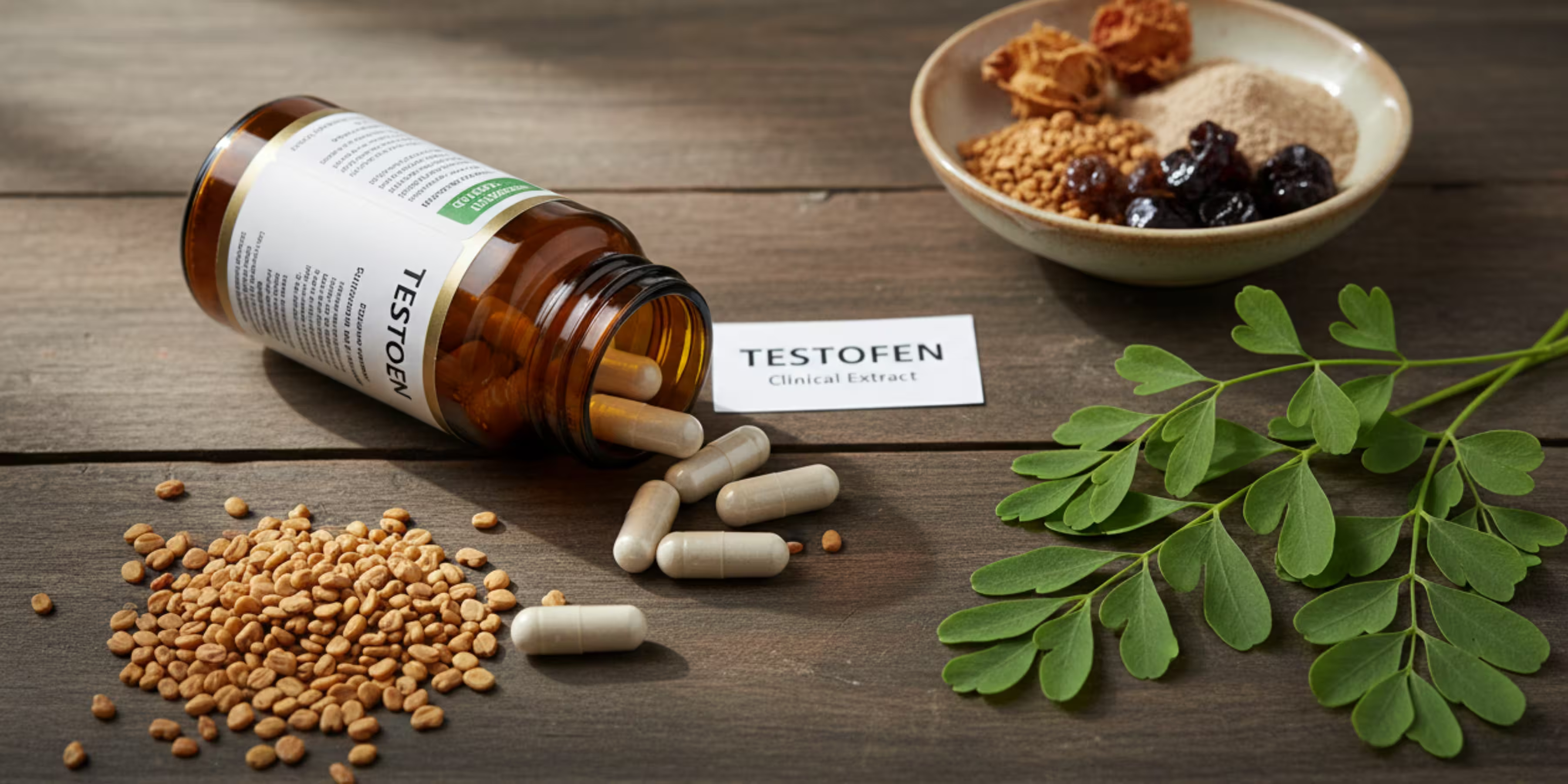
Fenugreek itself has a long history of use in traditional medicine, particularly in Ayurveda. It’s been used for everything from digestive health to promoting milk production in nursing mothers. The testosterone and libido applications are more recent, driven by modern research into its saponin content .
The Research: What Clinical Studies Show

1. Testosterone and Aging Male Symptoms
The most cited study on Testofen was published in The Aging Male journal in 2016 . This was a double-blind, randomized, placebo-controlled trial involving 120 healthy men aged 43 to 70 years. Participants received either 600 mg of Testofen daily or placebo for 12 weeks .
The results were noteworthy:
- Significant improvement in Aging Male Symptom (AMS) scores – Men taking Testofen reported fewer symptoms associated with age-related androgen decline, including both physical and sexual symptoms .
- Increased testosterone – Both total serum testosterone and free testosterone increased significantly in the Testofen group compared to placebo after 12 weeks .
- Improved sexual function – The study measured sexual function using a validated questionnaire (DISF-SR) and found significant improvements in the Testofen group. Men reported more morning erections and increased frequency of sexual activity .
The researchers noted that Testofen was “a safe and effective treatment for reducing symptoms of possible androgen deficiency, improves sexual function and increases serum testosterone in healthy middle-aged and older men” .
2. Libido and Sexual Arousal
An earlier study from 2011, published in Phytotherapy Research, focused specifically on libido . Sixty healthy men aged 25 to 52 took either 600 mg of Testofen daily or placebo for six weeks.
The findings: Testofen significantly improved the physiological aspects of libido, particularly in the domains of sexual arousal and orgasm. Men also reported greater satisfaction with muscle strength, energy levels, and overall well-being .
Importantly, serum prolactin and testosterone levels remained within normal ranges, suggesting Testofen supports rather than disrupts normal hormonal function .
3. Newer Research: 2024 Comparative Study
A 2024 study presented at a nutrition conference compared Testofen to a non-standardized fenugreek extract . Both were combined with zinc and magnesium. The results favored Testofen: men taking the Testofen formulation showed significantly better outcomes in duration of intercourse and confidence in achieving satisfactory sexual performance compared to those taking the non-standardized extract .
This matters because it suggests the standardization process—the specific extraction and concentration of active compounds—makes a real difference in outcomes.
4. Ongoing Research
Testofen continues to be studied. A Phase 3 clinical trial is currently underway investigating its effects on erectile function in men aged 40-75 . Another trial is exploring Testofen for Long COVID symptoms, including fatigue, energy levels, and libido . Results from these studies should provide even more clarity in coming years.
How Does Testofen Work?
The exact mechanisms aren’t fully established, but researchers have proposed several possibilities based on the properties of fenugreek saponins :
- Cholesterol modulation – Saponins may bind to cholesterol in the gut, reducing absorption. Since cholesterol is a precursor for testosterone synthesis, this might seem counterintuitive. However, the saponins in fenugreek may specifically target LDL (bad) cholesterol while preserving HDL, potentially improving the hormonal environment .
- Increased LH sensitivity – Some research suggests fenugreek compounds may make Leydig cells in the testes more sensitive to luteinizing hormone (LH), which signals testosterone production .
- Inhibition of enzymes that convert testosterone – Compounds in fenugreek may inhibit 5-alpha reductase and aromatase, enzymes that convert testosterone into DHT and estrogen respectively. This could theoretically preserve free testosterone levels .
- Improved testicular function – Animal studies have suggested fenugreek extracts may directly support testicular health and sperm production, though human research is limited.
The 2016 study authors noted: “It is hypothesized that the reduction in severity of symptoms and increased somatic and sexual function was directly or indirectly related to the increased serum testosterone” .
Dosage and Usage
The clinical studies on Testofen have consistently used:
- 600 mg daily – This is the dose used in most trials, typically taken as two 300 mg capsules .
- Duration – Studies have shown effects within 6-12 weeks of consistent use .
- Timing – Some protocols suggest taking Testofen with meals to enhance absorption, though specific timing instructions vary by product.
Testofen is a proprietary ingredient, so you’ll find it listed on supplement labels. It’s often combined with other nutrients like zinc and magnesium, which themselves support testosterone production .
Safety and Tolerability
Across multiple clinical trials, Testofen has demonstrated a good safety profile.
- Well-tolerated – The 2016 study reported that Testofen was “well-tolerated” with minimal side effects .
- Minor side effects – Headaches were reported in less than 5% of subjects, which was consistent with previous research .
- No significant changes – The studies monitored various health parameters including liver function, kidney function, and blood counts, finding no clinically significant changes .
That said, anyone with underlying health conditions or taking medications should consult a healthcare provider before starting any new supplement. The ongoing clinical trial excludes men with certain conditions including serious illness, anticoagulant use, and hormone therapy , which suggests areas where caution is warranted.
Testofen vs. Standard Fenugreek
This is worth emphasizing: Testofen is not the same as buying fenugreek capsules from any supplement brand.
The standardization matters. A 2024 study directly compared Testofen to a non-standardized fenugreek extract (both combined with zinc and magnesium) and found superior results with Testofen . The standardized extract led to better outcomes in both objective measures (duration of intercourse) and subjective measures (confidence in sexual performance) .
If you’re considering fenugreek for testosterone support, looking for products standardized to Testofen ensures you’re getting the ingredient that’s actually been studied.
What Testofen Can and Can’t Do
Based on the evidence, here’s a realistic picture:
What the evidence supports:
- Improving symptoms of age-related androgen decline
- Supporting healthy libido and sexual arousal
- Increasing both total and free testosterone in middle-aged and older men
- Enhancing sexual function, including frequency of activity and morning erections
What the evidence doesn’t support:
- That Testofen replaces testosterone therapy for clinically low levels
- That it works dramatically for everyone—individual responses vary
- That more than 600 mg daily produces better results (not studied)
- That it treats serious underlying medical conditions
The researchers themselves noted that Testofen “may become an alternative for symptomatic men where low or borderline testosterone is associated with obesity, chronic disease and mood disorder rather than organic hypothalamic–pituitary–testicular axis pathology” . In other words, it’s for men with mild to moderate age-related decline, not for those with serious hormonal disorders.
A Note on Lawsuits and Realistic Expectations
It’s worth acknowledging that Testofen and its manufacturer have been subjects of class action lawsuits . The allegations involved marketing claims that were supposedly unsupported. While the lawsuits were resolved, they serve as a reminder to approach any supplement with reasonable expectations.
The clinical evidence supports Testofen’s effects, but they’re modest—not miraculous. A 15% increase in testosterone might be meaningful for someone with borderline levels, but it’s not the same as pharmaceutical intervention. As with any supplement, realistic expectations matter.
Practical Takeaways
If you’re considering Testofen, here’s a sensible approach:
Before starting:
- Get your testosterone levels tested if you suspect they’re low
- Rule out other causes of symptoms (stress, poor sleep, nutrient deficiencies)
- Talk to a healthcare provider, especially if you have underlying conditions
Choosing a product:
- Look for Testofen listed as an ingredient—this ensures you’re getting the studied extract
- Check for third-party testing (USP, NSF, ConsumerLab)
- Avoid products with proprietary blends that hide individual ingredient doses
Dosage:
- 600 mg daily is the studied dose
- Take consistently for at least 8-12 weeks before judging effects
- Follow product instructions regarding timing and meals
Realistic expectations:
- Testofen may modestly increase testosterone and improve sexual function
- It works best as part of a healthy lifestyle—good sleep, exercise, stress management
- It’s not a replacement for medical treatment if you have clinically low testosterone
The Bottom Line
Testofen stands out in the crowded supplement space because it has actual clinical research behind it. Multiple randomized controlled trials have shown benefits for testosterone levels, sexual function, and age-related symptoms in middle-aged and older men . The effects are modest but real, and the safety profile appears good.
Is it a miracle cure? No. Does it work for everyone? Probably not. But for men experiencing age-related decline and looking for natural support, Testofen is one of the more evidence-backed options available.
As always, supplements support—they don’t substitute for—a healthy lifestyle. Combined with good sleep, regular exercise, stress management, and proper nutrition, Testofen may help some men maintain vitality as they age.
The research continues, with ongoing trials exploring its effects on erectile function and even Long COVID symptoms . The next few years should bring even more clarity.